What Is the Best Stainless Non Stick Cookware?

Choosing the best Stainless Non Stick Cookware means looking beyond a shiny finish or a familiar brand. The pan should release food easily, heat predictably, and feel balanced when you lift it from the stove. Small details matter: a flat base, a comfortable handle, and a coating that suits your cooking habits.

Grand View Research estimated the global cookware market at about US$29.8 billion in 2023 and projected continued growth through 2030. That estimate reflects a broad market, not proof that one pan performs best. Worth remembering. A market report can describe demand, but it cannot tell you whether eggs slide cleanly from a specific skillet or whether its handle stays comfortable during a long meal. Those questions call for product specifications, careful comparisons, and, where available, independent testing.

This guide examines how construction, coating, heat compatibility, cleaning, and warranty affect everyday use. Stainless steel can offer a sturdy cooking surface, while a nonstick layer may reduce sticking and simplify cleanup. The trade-off is real. Coatings differ, and care instructions matter; high heat or abrasive tools may shorten a pan’s useful life. We’ll separate measurable features from marketing claims and explain what to check before buying. No single pan fits every kitchen. That is the part worth thinking through.
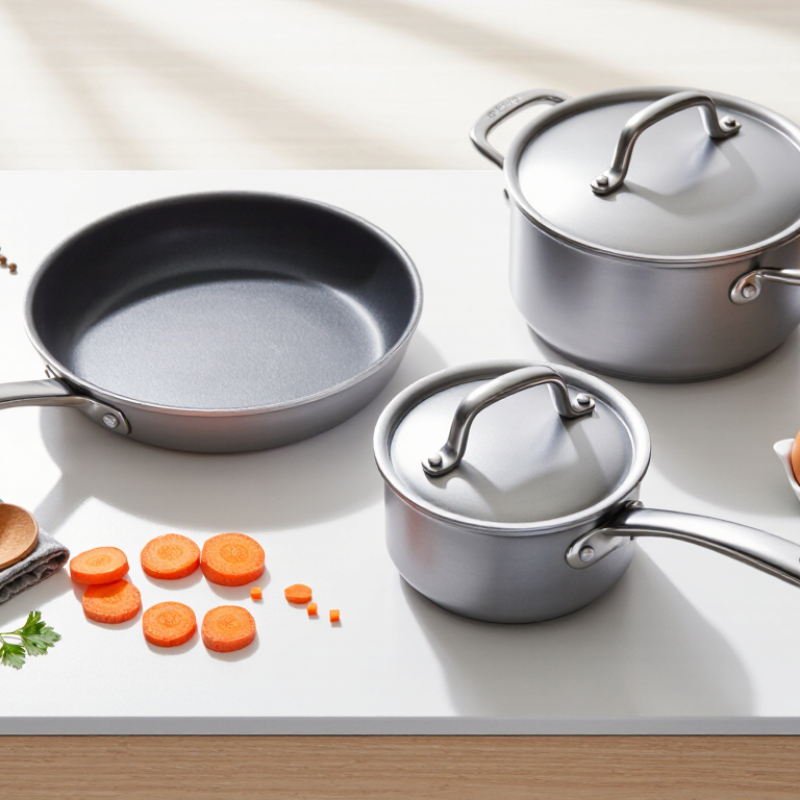
What Is the Best Stainless Non Stick Cookware?

What Stainless Steel Nonstick Cookware Is and How It Works

Stainless steel nonstick cookware is not one single material. It usually means a stainless-steel pan with a low-friction cooking surface, or a textured steel surface designed to reduce sticking. The steel body provides structure; some pans add an aluminum layer to spread heat more evenly. The coating does the release work. That distinction matters.

The International Stainless Steel Forum defines stainless steel as an iron alloy containing at least 10.5% chromium. That chromium helps form a protective surface, but it does not make bare steel nonstick. Eggs can still cling to a cool, dry pan. A thin film of oil and a properly heated surface help, though results vary with the pan’s construction and the food.

If the cooking surface uses PTFE, it releases food by offering a slippery, low-friction layer. The German Federal Institute for Risk Assessment warns that PTFE cookware can release hazardous gases if heated above 360°C. Avoid heating an empty pan for long. Ceramic-style coatings work differently and may lose release performance with wear; “stainless nonstick” alone does not tell you which surface you are buying. Look for the coating type and care instructions. A little ambiguity remains. The label is not a performance test.

Materials and Construction That Shape Cooking Performance

Stainless nonstick cookware combines a stainless steel body with a food-release coating, but the layers beneath that surface shape how it cooks. A bonded aluminum or copper core helps spread heat across the base and reduce hot spots. This matters when eggs set quickly at the pan’s edge while the center stays cooler. A thick, flat base also sits more steadily on the burner, though it may take longer to warm.

Look closely at the coating and its support. A smooth, even finish should have no visible bubbles, scratches, or thin patches. The coating needs a stable surface beneath it; otherwise, everyday heating and stirring may wear it unevenly. Stainless steel walls add strength, while securely attached handles should feel balanced when the pan holds food. Small details matter. Rivets can collect residue, so check whether they are easy to clean.

Heat changes everything. Even a well-built pan can disappoint if it is overheated or heated empty for too long. Moderate heat usually gives the coating a gentler working life, and soft utensils help limit surface damage. In a home kitchen, construction is only part of the decision: weight, stovetop compatibility, and cleaning habits matter too. I would not judge a pan by its shiny exterior alone. Its layers are harder to see, and that makes comparison imperfect.

What Is the Best Stainless Non-Stick Cookware?

How cookware materials affect heat flow

Approximate thermal conductivity at room temperature: aluminum and copper conduct heat much more readily than stainless steel. In stainless non-stick cookware, an aluminum or copper core can help spread heat, while stainless steel provides a durable cooking surface. Actual results depend on the cookware’s construction and thickness.

Key Features to Compare Across Cookware Options

What Is the Best Stainless Non Stick Cookware?

When comparing stainless non-stick cookware, look beyond the surface. Check the coating type, pan thickness, weight, handle comfort, and compatibility with your cooktop. ASM International’s engineering property data puts room-temperature thermal conductivity at roughly 16 W/m·K for 304 stainless steel, compared with about 237 for aluminum and 401 for copper. These are material figures, not pan-performance guarantees. A layered base can change how evenly a pan heats.

Compare oven-safe limits and care instructions, too. Ask whether the coating has published release or abrasion-test results, and check how those tests were conducted. A slick surface matters, but so does a flat base that sits steadily on the burner. Small details count. A heavy pan may feel stable, yet become awkward when lifting a full meal. I still find this trade-off easy to underestimate.

Tips: Test the handle grip with a dry hand, and check the pan’s weight before buying. For quick heating, compare the base construction—not just the stainless-steel label.

How to Choose Cookware for Your Kitchen and Cooking Style

What Is the Best Stainless Non Stick Cookware?
How to Choose Cookware for Your Kitchen and Cooking Style

The best pan depends on what you cook, how often you cook, and how much care you want to give it. Stainless steel is durable and handles browning well, but food can stick if the pan is too cool or dry. Cookware with a nonstick cooking surface releases eggs and delicate fish more easily, though its surface may need gentler utensils and cleaning. “Stainless nonstick” can describe different constructions, so check the product details rather than relying on the label alone. A sturdy base and comfortable handle matter, too.

Think about your usual meals. If you sear vegetables or make pan sauces, stainless steel can offer better browning and tolerate higher heat. If you often cook omelets or quick weekday breakfasts, a nonstick surface may save scrubbing time. For a small kitchen, one versatile skillet may be more useful than a matching set. Check that the pan suits your cooktop, feels balanced when lifted, and fits your storage space. A heavier pan can feel reassuring, but it may become a nuisance to wash.

Tips: Match the pan to the task. Preheat stainless steel, then add oil; avoid overheating nonstick cookware. Use soft sponges, and follow the care instructions. Tiny details matter. A pan that is easy to reach and clean is more likely to earn its place in your daily routine.

What Is the Best Stainless Non Stick Cookware? - How to Choose Cookware for Your Kitchen and Cooking Style

Cookware Option Best For Cooking Performance Durability and Care What to Check Before Buying
Stainless-steel pan with a nonstick interior Eggs, pancakes, delicate fish, and everyday low- to medium-heat cooking. Food releases more easily than from bare stainless steel, so it generally needs less oil. The stainless exterior may be compatible with induction, but check the product specifications. The coated surface can wear or scratch over time. Use nonmetal utensils and follow the maker’s cleaning and oven-use instructions. Confirm the interior coating type, induction compatibility, oven-safe temperature, and whether the handle is oven-safe.
Tri-ply stainless steel with an uncoated cooking surface Searing meat, browning vegetables, making pan sauces, and cooks who want a long-lasting pan. Not inherently nonstick. Preheating the pan and using enough cooking fat can help reduce sticking. A bonded aluminum or copper layer can improve heat distribution. Usually durable and suitable for scrubbing, but food residue may need soaking. Stainless steel is generally dishwasher-safe; check the care instructions. Look for bonded construction, a flat base, comfortable handles, and compatibility with your cooktop.
Stainless exterior with a ceramic nonstick interior Light cooking and cooks who prefer a coating marketed as ceramic-based. Offers easy food release when new, but performance depends on the coating and correct heat use. Ceramic coatings are not the same as bare stainless steel. Coating performance can diminish with use. Avoid overheating, abrasive cleaners, and utensils that may damage the surface. Check the care guidance, oven limits, and the manufacturer’s description of the coating rather than assuming all ceramic coatings perform alike.
Stainless-steel saucepan with a nonstick interior Oatmeal, rice, sauces, and foods that tend to cling or scorch in a small pot. The coated interior can make stirring and cleanup easier. It is best suited to gentle or moderate heat rather than high-heat searing. Use soft cleaning tools and avoid prolonged high heat, which can shorten the life of many nonstick surfaces. Choose a size suited to your usual portions and check lid fit, handle comfort, and any stated temperature limits.
Nonstick skillet paired with uncoated stainless-steel cookware Kitchens that prepare both delicate foods and dishes requiring browning or deglazing. A practical combination: use the coated skillet for easy-release foods and uncoated stainless steel for high-heat browning and pan sauces. Each pan can be used within its strengths, reducing wear on the coated skillet. Follow the care instructions for both types. Consider the number of pans you use regularly, available storage, cooktop type, and whether replacement of a worn coating is acceptable.

Quick guide: “Stainless nonstick” usually means stainless steel on the outside with a nonstick coating on the cooking surface; it does not mean that ordinary, uncoated stainless steel is naturally nonstick. For the best match, compare coating type, heat limits, cooktop compatibility, and care instructions.

Safe Use, Cleaning, and Long-Term Maintenance

What Is the Best Stainless Non Stick Cookware?

Safe Use, Cleaning, and Long-Term Maintenance

Stainless nonstick cookware needs gentle care: the steel body is durable, but its coating can wear. The German Federal Institute for Risk Assessment (BfR) warns that overheated PTFE-coated cookware can release hazardous gases, particularly when an empty pan reaches about 360°C (680°F). Preheat on low or medium heat, add oil or food promptly, and avoid leaving a pan unattended over a flame. That matters. A scratched or peeling surface is a sensible reason to replace the pan, even if it still cooks.

Tips: Let the pan cool before washing. Use warm, soapy water and a soft sponge; skip steel wool and abrasive powders. Dry it fully to reduce water spots. USDA FSIS guidance says perishable leftovers should be refrigerated within two hours. For easier cooling and storage, transfer them to shallow containers instead of leaving food in the pan.

Long-term care is mostly about small habits. Use silicone, wood, or other non-scratching utensils, and stack pans with a cloth between them. Check the cooking surface regularly under good light. A dull patch alone may be cosmetic; flaking or exposed substrate is more concerning. The less tidy truth is that even careful use cannot preserve every coating indefinitely. Follow the pan’s care instructions, since coatings and construction vary.

Back to top