Choosing China for Hotel Soaps And Shampoos wholesale can reduce purchasing costs, but price alone should never guide a hotel’s decision. Reliable sourcing requires careful checks on formulation, factory experience, packaging quality, production capacity, and export documentation. A clean guest bathroom often reflects dozens of unseen purchasing choices.
Hotel amenities consultant Alicia Hart offers a practical reminder: “A low price means little when guests remember dry skin or weak scent.” This principle supports a more responsible buying process. Suppliers should provide clear ingredient lists, product samples, safety documentation, and consistent batch information. Buyers should also inspect soap texture, shampoo viscosity, fragrance strength, and packaging seals. Small details matter.
Not every supplier performs equally. That deserves attention. Some factories present attractive catalogs but provide limited customization or unstable lead times. Others may offer refill bottles, paper wrapping, mini tubes, or private-label designs for different hotel categories. Sustainable materials can reduce waste, yet they may increase unit costs or require new filling equipment. The balance is not always obvious.
This guide examines China Hotel Soaps And Shampoos wholesale opportunities through a practical procurement lens. It considers supplier verification, minimum order quantities, sample testing, customization, shipping coordination, and after-sales communication. Buyers should compare several quotations and record every specification in writing. A cheaper order can become expensive when quality varies. Careful decisions protect guest comfort, brand reputation, and long-term operating value.
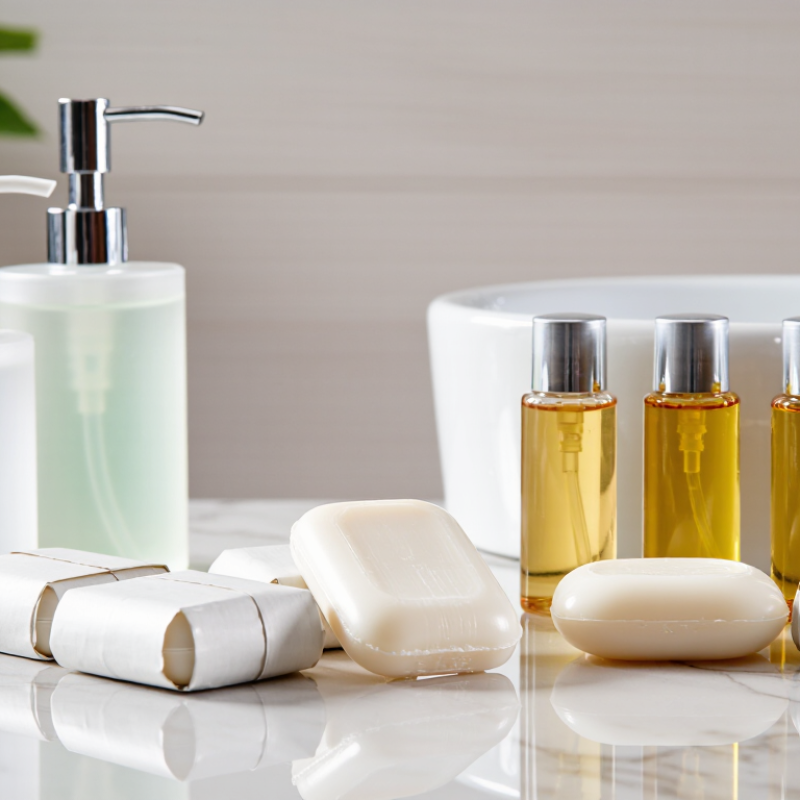
China’s hotel amenity market often centers on compact, practical formats. Standard wholesale requests commonly include 15–40 g soap bars and 20–40 mL shampoo bottles. These sizes suit short stays, housekeeping routines, and controlled room costs. A 20 g bar feels modest but works well for overnight accommodation. A 40 g bar offers a more substantial guest experience.
Packaging needs careful matching. Soap wrappers must resist moisture in humid bathrooms. Shampoo bottles should stand securely on narrow vanity trays. Flip-top caps, leak checks, and readable labels reduce daily complaints.
Small details matter. In sourcing projects, I would request production samples before approving a large order. The sample should be tested for fragrance strength, lather, rinsing feel, cap performance, and carton protection. A pleasant scent can still become a problem when it lingers too strongly.
Wholesale buyers should confirm net content, ingredient information, shelf-life marking, carton quantity, and delivery terms in writing. They should also ask for batch consistency records and basic quality inspection results. A factory may quote an attractive unit price, yet weak sealing can create waste during transport. That lesson is easy to overlook. Smaller packaging can also increase plastic use per guest, so recyclable materials and right-sized cartons deserve review. I would not assume that one formula suits every property. Business hotels, resorts, and hostels may need different fragrance levels, packaging strength, and replenishment rates.
China’s hotel soaps and shampoos should meet clear product standards before wholesale purchase. A skin-friendly pH between 5.0 and 6.5 supports comfortable daily use. However, pH alone does not prove product quality. Ask for batch test records, stability data, and sample approval procedures. INCI labels should list ingredients in the correct naming format. They should also show net content, batch information, shelf life, and usage guidance. During supplier reviews, I check whether printed labels match the tested formula. Small mismatches can create serious concerns.
Tips: Test samples from different batches. Check the pH with calibrated equipment. Read every ingredient line. Request current GMP documentation.
ISO 22716 GMP shows that manufacturing follows controlled practices for production, storage, hygiene, and quality checks. It is useful evidence, but buyers should verify its scope and validity. A certificate copied into a sales file is not enough. Ask how workers record filling temperatures, cleaning tasks, and batch releases. These details reveal whether procedures work daily. Packaging also matters; pumps should close securely, and soap wrappers should resist humid bathrooms. I have seen attractive samples fail after several weeks of heat exposure. That experience is easy to overlook. A practical wholesale decision needs both documents and repeated physical testing.
| Product Dimension | Standard or Requirement | Wholesale Specification | What to Check Before Purchase | Status |
|---|---|---|---|---|
| Finished-product pH | Target range: pH 5.0–6.5 for many rinse-off cleansing products intended for routine skin or hair use. | Liquid shampoo and body wash: typically specify a controlled target and acceptance range, such as pH 5.0–6.5, based on the validated formula. | Request the product specification, test method, calibrated-meter records, and a recent certificate of analysis. pH should be confirmed on the finished product, not only on the raw materials. | Required specification |
| Soap format | Solid soap is generally an alkaline cleansing product because traditional soap is made from fatty-acid salts. | For solid hotel soap, define net weight, dimensions, fragrance level, appearance, hardness, lather, and packaging format rather than applying a liquid-shampoo pH target. | Confirm whether the product is true soap or a synthetic detergent bar. Request finished-product test results and packaging samples. | Format-dependent |
| INCI ingredient label | Ingredients should be listed using recognized International Nomenclature of Cosmetic Ingredients (INCI) names, subject to the destination market’s labeling rules. | Provide a complete ingredient declaration for shampoo, body wash, conditioner, lotion, and soap, including fragrance or allergen information where legally required. | Check the INCI list against the formula, ingredient documentation, allergen requirements, claims, and import regulations of the selling country. | Required label data |
| Ingredient order | Cosmetic ingredients are generally declared in descending order of predominance, subject to applicable local rules and concentration thresholds. | Use the final approved formula and ensure the artwork, carton, sachet, bottle, and refill packaging carry consistent ingredient information. | Compare the approved artwork with the master formula and regulatory review. Confirm that any colorants, preservatives, and fragrance components are correctly identified. | Label control |
| ISO 22716 GMP | ISO 22716 provides guidelines for the production, control, storage, and shipment of cosmetic products under good manufacturing practices. | Prefer a manufacturing site with a current ISO 22716 certificate or equivalent documented cosmetic GMP system relevant to the production facility. | Check certificate scope, issuing body, validity dates, site address, audit status, batch records, sanitation procedures, and change-control documentation. | Good practice |
| Microbiological quality | Water-based shampoos and body washes require microbiological controls. Acceptance limits depend on product type and destination-market requirements. | Define total aerobic microbial count, yeast and mold limits, and absence or control of specified microorganisms according to the applicable standard or customer specification. | Request a recent microbiological certificate of analysis, preservative-challenge or preservation-efficacy evidence where appropriate, and water-quality records. | Batch release check |
| Preservative system | Preservatives must be suitable for the formula and comply with the cosmetic regulations of the destination market. | Specify preservative type, concentration range, compatibility with packaging, and required in-use or stability testing. | Review the formula, regulatory status, stability data, microbial test results, and any restrictions applying to the destination country. | Regulatory check |
| Stability testing | A finished product should remain within defined quality specifications throughout its stated shelf life under labeled storage conditions. | Evaluate appearance, odor, color, pH, viscosity, packaging compatibility, phase separation, and microbial quality under suitable accelerated and real-time conditions. | Request a stability protocol, test results, expiry or period-after-opening rationale, and evidence that the tested packaging matches the wholesale packaging. | Shelf-life support |
| Packaging and dosage | Packaging should protect the formula, prevent leakage, and provide safe and practical dispensing in hotel environments. | Common formats include 20–50 ml bottles, 10–30 ml sachets, 20–40 g solid bars, wall-mounted dispensers, and bulk refill containers, subject to project needs. | Test closure torque, leakage, drop resistance, pump output, label adhesion, batch coding, recyclability information, and compatibility with the formula. | Project-dependent |
| Batch traceability | Each production batch should be identifiable through a batch or lot number linked to manufacturing and quality records. | Use readable batch coding on the primary container and outer carton, with documented retention samples and a defined recall procedure. | Check the batch-number format, production date, expiry or best-before information where required, retention-sample policy, and complaint-handling process. | Quality control |
| Certificate of Analysis | A batch-specific certificate of analysis should demonstrate conformity with the agreed finished-product specifications. | Include appearance, odor, color, pH where applicable, viscosity where applicable, net content, microbiology, and other critical quality attributes. | Confirm that the certificate matches the shipped batch, approved specification, test methods, release date, and authorized quality reviewer. | Recommended per batch |
| Claims and fragrance | Claims such as “moisturizing,” “mild,” “natural,” or “hypoallergenic” should be supportable and compliant with the destination market’s advertising rules. | Define fragrance profile, intensity, allergen disclosure, claim wording, and supporting evidence before approving packaging artwork. | Review claim substantiation, fragrance documentation, safety information, allergen declarations, and consistency between marketing text and formula. | Evidence required |
| Storage and transport | Cosmetic products should be stored and transported in conditions that preserve their quality and packaging integrity. | Define temperature range, humidity protection, pallet configuration, carton strength, transit testing, and protection from direct sunlight or freezing. | Request storage instructions, transport qualification where relevant, carton specifications, and a process for handling damaged or temperature-exposed goods. | Supply-chain control |
Note: Cosmetic requirements vary by destination market. The pH range shown is a purchasing specification for selected rinse-off products, not a universal legal limit. Final approval should be based on the finished formula, applicable regulations, validated test methods, and the intended packaging.
China Best Hotel Soaps And Shampoos Wholesale?
Choosing a reliable Chinese supplier requires more than comparing unit prices. In hotel procurement, I have found that product consistency matters more than a small discount. Ask for a written MOQ covering soap size, shampoo volume, packaging, and fragrance. Some factories offer low MOQs for standard items but require larger orders for custom formulas. Request samples from the same production line. Samples from a laboratory may look better than bulk goods.
A practical lead time is usually 7–30 days after artwork approval and deposit confirmation. Complex packaging can extend this schedule. OEM orders need clear details, including ingredient declarations, bottle dimensions, label files, carton strength, and closure type. Confirm whether the factory or your team handles testing and documentation. Do not trust a verbal promise. Put every date in the purchase agreement.
Factory audits should examine raw-material storage, batch records, filling equipment, hygiene controls, and final inspection procedures. Review recent production records, not only polished showroom photos. Photos are not enough. Ask for corrective-action reports when problems appear. I also recommend checking a pre-shipment sample against the approved reference sample. A spreadsheet can still mislead. One missed carton measurement may disrupt an entire hotel delivery. Leave time for rework, because perfect schedules rarely survive real production.
China Best Hotel Soaps And Shampoos Wholesale?
Hotel buyers should match packaging with housekeeping routines, guest expectations, and waste targets. Single-use soap bars, shampoo bottles, and sachets offer clean handling and simple room presentation. They also create more daily waste. Refillable dispensers reduce replacement frequency and support a calmer housekeeping workflow. However, poorly designed pumps can drip, clog, or look untidy after repeated use. In practice, the perfect format rarely exists.
Packaging made with 30–50% post-consumer recycled (PCR) plastic offers another practical route. A 30% PCR blend often balances appearance, strength, and production stability. A 50% blend can reduce virgin plastic use further, but it may show more color variation or require thicker walls. Suppliers should provide PCR content records, material specifications, and batch traceability. Compatibility testing is important for sulfate-free shampoos, liquid soaps, and concentrated formulas. A bottle that softens in a warm bathroom becomes an expensive mistake.
Tips: Order samples before approving wholesale quantities. Fill each package and store it near a steamy shower. Check leakage, label adhesion, pump performance, and cap strength after several weeks. Ask whether refill containers can be cleaned consistently. Also review the full cost, including labor, replacements, transport, and disposal. This step is easy to overlook.
Hotel amenity packaging commonly ranges from approximately 30 mL single-use containers to 300 mL refillable bottles and 1,000 mL bulk dispenser systems. PCR plastic content is shown as a procurement target range of 30–50% for suitable plastic packaging components; the exact percentage depends on material availability, product requirements, and local regulations.
China Best Hotel Soaps And Shampoos Wholesale?
Wholesale buying should begin with landed cost, not the factory quote. A US$0.18 soap can become US$0.31 after freight, cartons, duties, and inspection. Dispenser compatibility and hotel labor also affect value. Request a complete cost sheet. Grand View Research estimated the global hotel toiletries market at about US$18 billion in 2023. It projects continued growth through 2030. Bulk volume can still hide waste, especially when damaged packaging increases room-service replacement costs.
Certification needs practical verification. Ask for ISO 22716 manufacturing evidence, ingredient lists, safety data sheets, certificates of analysis, microbiological tests, and batch traceability. Requirements may differ by destination market. UN Tourism reported approximately 1.4 billion international tourist arrivals in 2024. That recovery increases pressure on reliable supply and documentation. A certificate folder looks convincing, but it cannot replace random batch testing. This is where buyers can become too optimistic.
Customization should match the property’s real operating needs. Printed bottles, fragrance options, refill packs, and private formulas affect minimum order quantities and lead times. Compare total value per occupied room, not only unit price. For example, a 30 mL shampoo with a stronger pump may reduce leakage and housekeeping complaints. However, custom packaging can create slow-moving inventory. A useful tender should score cost, compliance, delivery reliability, guest experience, and waste. The best supplier is not always the cheapest supplier.
For an immediate response, please call this
number 45038523
Price: