Choosing the best Infrared Heat Mat requires more than comparing prices, colors, or attractive wellness claims. The right choice depends on heat consistency, material quality, temperature control, safety design, and your personal comfort. A mat should warm evenly, without creating painfully hot spots beneath your lower back or shoulders.
Dr. Michael Hamblin, a respected photobiomodulation researcher, has emphasized, “Light is a very powerful tool.” His observation deserves careful interpretation. Infrared energy may feel soothing, but comfort does not automatically prove a medical benefit. This distinction matters. A reliable buyer should separate measurable features from marketing language.
Check the mat’s heating range, control accuracy, timer function, and surface construction. Look for clear information about infrared wavelengths, electrical safety testing, and cleaning instructions. Some products use carbon fibers, while others include mineral layers or stones. These materials can affect weight, flexibility, heat distribution, and maintenance. Heavier is not always better.
Your use case also matters. A compact mat may suit a desk chair, while a wider design works better for the full back. Consider storage too. An awkward mat may become expensive clutter.
Do not ignore small details. Read the warranty. Examine the controller. Notice whether the cable feels secure. Ask whether replacement parts are available.
No choice is perfect. Even careful buyers can overestimate advertised benefits. A sensible decision combines specifications, independent evidence, and real-world usability. The best Infrared Heat Mat is the one that delivers steady warmth, practical control, and a safety profile you can understand.
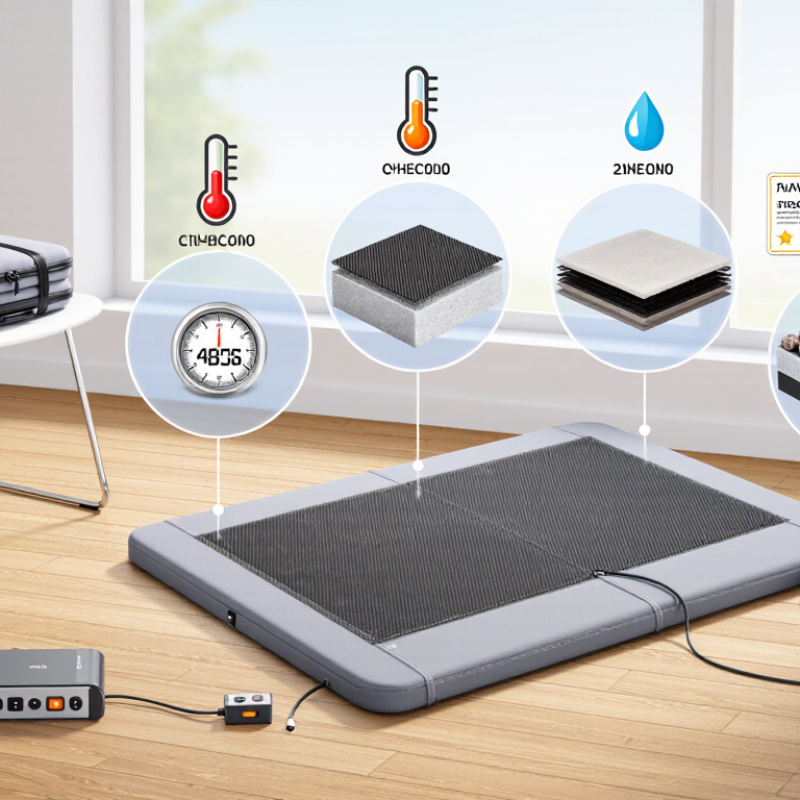
An infrared heat mat converts electrical energy into heat through a resistive element. The warm surface emits infrared radiation, which travels across the room and warms nearby floors, furniture, and people. These surfaces then release heat slowly through conduction and natural convection. It feels different from a fan heater. The warmth is quieter and more localized.
The U.S. Energy Information Administration reports that space heating used about 42% of household energy in 2020. The International Energy Agency also estimates that buildings consume roughly 30% of global final energy. These figures make heat distribution important, not just wattage. A mat with 150 watts per square meter may heat a small insulated area effectively, but poorly insulated floors can lose heat downward. That assumption is incomplete.
Check the mat’s power density, operating temperature, sensor accuracy, and compatibility with the floor covering. A programmable thermostat can prevent unnecessary cycling. Short tests matter. Place a thermometer above the mat, then compare readings near the floor and at sitting height. A large temperature difference suggests weak circulation or poor insulation. Infrared labels can sound impressive. They do not guarantee better performance. Moisture resistance, electrical certification, and overheat protection deserve equal attention. Always follow the installation instructions, because even a well-designed mat can perform badly when covered or folded.
Choosing the best infrared heat mat begins with identifying your actual heating needs, not chasing the highest wattage. Measure the surface. Note the room’s lowest temperature, insulation quality, and available power source. A small desk mat may need gentle, even warmth, while a large enclosure or floor area may require broader coverage. Do not guess.
Think about the intended use and daily routine. Will the mat support a person, warm an enclosure, protect sensitive equipment, or maintain a stable work surface? Each purpose demands different temperature limits, coverage, and control. For enclosed spaces, check ventilation and measure the temperature at the heated surface, not only beside it. A thermostat with a reliable sensor can reduce temperature swings and limit overheating. Always follow the product’s instructions, keep the mat flat, and inspect the cable before use.
Practical testing can reveal problems that specifications miss. Place a thermometer at several points and watch the readings for at least an hour. Uneven warmth may indicate poor contact, insulation gaps, or an unsuitable size. I would rather choose a slower mat with steady control than a powerful one that creates hot spots. Still, estimates can be imperfect. Room conditions change, and a setup that works in winter may feel excessive in spring. Review the readings regularly, especially after moving the mat, changing its cover, or altering the surrounding space.
| Intended Use | Most Suitable Mat Type | Typical Temperature Range | Suggested Power Consideration | Recommended Features | Key Safety Requirements | Best Selection Tip |
|---|---|---|---|---|---|---|
| Personal muscle relaxation | Flexible far-infrared heating pad or mat | Approximately 35–60°C (95–140°F), depending on the controller and product design | Usually moderate wattage; choose according to the mat’s size and the manufacturer’s rated output | Adjustable temperature, automatic shut-off, washable or easy-clean cover, flexible construction | Do not sleep on a heating mat unless it is specifically designed and approved for overnight use. Avoid direct contact with bare skin at high settings. | Choose a size that covers the target area without forcing the mat to fold or overlap. |
| Back, shoulder, or leg coverage | Large-area infrared mat with zoned or multi-level heating | Approximately 35–60°C (95–140°F) | Higher total wattage may be needed for larger surface areas; verify that the controller is rated for the mat | Multiple heat settings, timer, even heat distribution, insulated outer layer, detachable controller | Use only on a stable, dry surface. Inspect the power cord and heating element regularly for wear. | Prioritize uniform coverage and independent temperature control over maximum temperature. |
| Seed germination and propagation | Low-temperature propagation heat mat | Commonly around 21–30°C (70–86°F) at the growing surface | Low to moderate wattage; required output depends mainly on tray dimensions and room temperature | Water-resistant construction, thermostat compatibility, flat heating profile, stable base | Keep electrical connections away from water. Do not cover the mat with materials that can trap excessive heat unless the instructions permit it. | Use a thermostat and measure the temperature at the tray or root-zone level rather than relying on room temperature. |
| Reptile or enclosure supplemental heating | Low-profile under-tank or external infrared heat mat | Must be matched to the animal and enclosure; create a controlled warm zone rather than heating the entire enclosure uniformly | Choose based on enclosure size, substrate thickness, ambient temperature, and the required temperature gradient | Thermostat control, probe placement, heat-resistant surface, protected wiring, compatible mounting method | A thermostat is essential. Do not place the mat inside the enclosure unless it is specifically designed for internal use and protected from moisture and chewing. | Provide a warm side and a cooler side so the animal can regulate its body temperature. |
| Cold floors, desks, or localized comfort heating | Low-wattage surface-heating mat designed for the intended furniture or floor application | Typically warm to the touch rather than excessively hot; follow the product’s stated operating limits | Low wattage is generally adequate for localized comfort heating; larger or poorly insulated areas require more output | Non-slip backing, overheat protection, timer, low surface temperature, durable outer cover | Never place a heat mat beneath thick rugs, mattresses, or tightly enclosed furniture unless the product is specifically rated for that use. | Check the installation surface and clearance requirements before buying. |
| Drying or warming equipment and materials | Rigid or semi-rigid infrared heating panel or industrial-style mat | Depends on the material; use the lowest effective temperature to avoid damage | Calculate the required output from surface area, insulation, airflow, and the desired temperature increase | External thermostat, thermal fuse, heat-resistant surface, continuous-duty rating, replaceable controller where available | Keep flammable materials away from the heating surface and do not use a consumer mat for industrial duty unless it is rated for continuous operation. | Confirm the required duty cycle and maximum operating temperature before selecting the mat. |
| Portable or travel use | Compact, low-voltage infrared heating pad with a suitable power adapter | Usually adjustable within a moderate comfort-heating range | Verify voltage, current draw, connector type, and power-bank compatibility before use | Lightweight construction, fold-safe design, low-voltage operation, timer, storage protection | Do not connect a low-voltage mat directly to an incompatible power source. Avoid folding the mat sharply while it is operating. | Choose electrical compatibility and portability before selecting maximum heat output. |
Infrared heat mats differ by wavelength, heating element, and surface temperature. Near-infrared systems respond quickly and can feel intense on exposed skin. Mid-infrared designs provide deeper, steadier warmth. Far-infrared mats usually emphasize gentle radiant heating through carbon elements or ceramic materials. These labels can be confusing. Wavelength alone does not prove better performance. Check the actual temperature range, heating uniformity, and intended use.
Material choice affects comfort and service life. Carbon-fiber elements are flexible and heat evenly when properly embedded. Ceramic elements can retain warmth, but they may add weight and become brittle after impact. A thick, non-slip silicone surface feels practical under a mat. However, softness can reduce heat transfer. Look for sealed edges, reinforced wiring, and a cover that resists sweat and accidental spills. Measure the surface with an infrared thermometer; the center may be warmer than the corners.
Safety deserves closer attention than advertised power. Choose adjustable controls, an automatic shutoff, and protection against overheating. A grounded plug and recognized electrical testing provide useful evidence, not decoration. Never fold a powered mat or place heavy furniture over it. Start at a low setting for ten minutes, then check your skin and the mat. I have found that “even heating” is not always even in real rooms. Ventilation, clothing thickness, and body position can change the experience. Read the instructions carefully, and replace any mat with cracked insulation, exposed wiring, or unusual odors.
Choosing an infrared heat mat starts with matching its heated area to the surface you actually use. Measure the footprint, not the room. A mat that leaves cold edges may encourage higher settings and waste electricity. The U.S. Department of Energy explains that electric resistance heating converts electricity into heat at the point of use. A 1,000-watt mat running for four hours consumes about 4 kilowatt-hours.
Control matters more than dramatic temperature claims. Choose a model with an adjustable thermostat, stable sensors, and a timer. Verify the surface temperature with a calibrated thermometer during setup. The displayed setting is not always the real surface temperature. Small errors can become uncomfortable over several hours. I remain cautious about products promising rapid heating without publishing testing conditions.
Durability depends on insulation, cable strain relief, moisture protection, and repeated heating cycles. IEC 60529 provides the widely used IP rating system for resistance against dust and water, but an IP rating does not prove long-term heating performance. Request test details, warranty terms, and instructions for folding or storage. The International Energy Agency’s Energy Efficiency 2023 report identifies buildings as a major share of global energy demand, making controlled operation worthwhile. Still, efficiency claims need context. A lower wattage mat may use less energy, yet it may also heat too slowly for your application. Test the real setup.
Comparing typical infrared heat-mat formats by usable surface area, maximum controlled temperature, power consumption, and expected service life.
Larger mats provide more coverage but generally require more power. Adjustable temperature control improves safety and efficiency, while reinforced insulation, sealed construction, and strain-resistant cables can extend service life. Values shown are representative specification ranges for common non-branded mat categories; always confirm the exact product datasheet before purchase.
Selecting the right infrared heat mat starts with your space, not its advertised wattage. Measure the usable floor area after removing cabinets, fixtures, and permanent furniture. A six-square-metre room may need coverage closer to four square metres. That difference affects both comfort and cost. Check the mat’s power demand against your circuit. Older wiring may require an electrician’s assessment. Do not guess here.
Your budget should include more than the purchase price. Add a compatible thermostat, installation materials, electrical work, and possible insulation upgrades. Good insulation keeps warmth from disappearing into a cold subfloor. A programmable thermostat can reduce unnecessary running time. Look for temperature sensing, overheat protection, and clear installation instructions. Safety documentation matters more than attractive packaging.
Match the mat to the surface. Tile, stone, and other heat-tolerant finishes usually transfer warmth effectively, but each flooring material has limits. Confirm the manufacturer’s temperature guidance before installation. Never cut or overlap a mat unless the instructions specifically allow it. I once underestimated furniture placement and lost useful coverage near a wall. Measure twice. Draw the layout first. Also consider daily habits: a small bedroom may need less coverage than a large, poorly insulated living area. If the cheapest option requires complicated installation, it may not be the economical choice after all.
For an immediate response, please call this
number 45038523
Price: