How to Choose the Best Resin Toilet Brush Holder

Choosing a Resin Toilet Brush Holder is a small decision with daily consequences. It sits beside the toilet, where splashes, damp floors, and frequent handling test its finish. The right choice should balance stability, easy cleaning, ventilation, and a size that fits the brush—not just a color that matches the tiles. Small details matter.

Material claims deserve care. The OECD’s 2022 Global Plastics Outlook reports that global plastics use reached 460 million tonnes in 2019. That figure covers plastics broadly, not resin bathroom products, so it cannot tell us which holder lasts longest. It does, however, make durability and material transparency sensible questions to ask. Look for a smooth, nonporous interior, a weighted or wide base, and a removable drip tray if the design includes one. Check the seams and underside, too; water can collect where a quick glance misses it.

Industrial-design pioneer Dieter Rams offered a useful standard: “Good design is long-lasting.” Applied here, that means choosing a holder that remains steady, cleans without awkward corners, and does not hide the brush in a damp, enclosed cup. A glossy surface may look crisp on day one. It can also show water marks. There is no perfect finish. Before buying, compare dimensions with your available floor space and the brush handle, then check care instructions and replacement options. Those practical checks matter more than vague claims of “premium” resin. One honest limitation: public market reports rarely isolate toilet brush holders, so product-level testing and clear specifications are more useful than broad market forecasts.
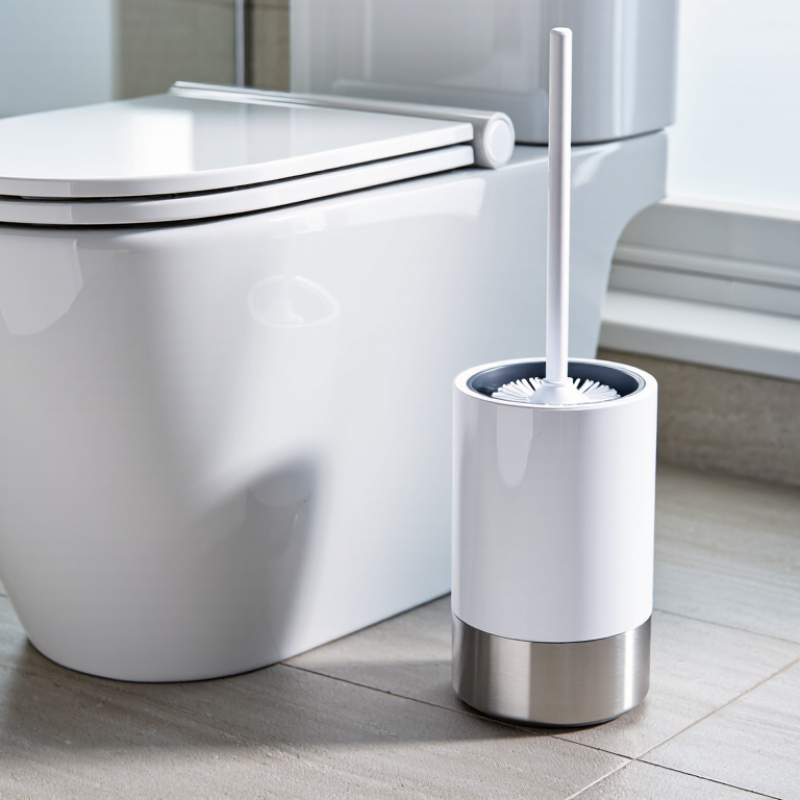
How to Choose the Best Resin Toilet Brush Holder

Understand the Design and Materials of Resin Toilet Brush Holders

Resin is a broad label, not a precise material specification. A toilet brush holder may use molded thermoplastic, such as polypropylene, or a cured polyester-based resin blend. These materials differ in weight, impact resistance, and repairability, so check the product’s material details rather than relying on a glossy finish. Small details matter. A smooth, nonporous interior is easier to wipe, while a removable drip cup makes trapped water visible. Look for a stable base and enough clearance around the brush head; tight-fitting holders can stay damp and develop odors.

Design should support cleaning, not just conceal the brush. Check for seams where residue could collect, and choose a finish that does not make scratches or mineral marks hard to spot. The OECD’s Global Plastics Outlook (2022) reports that global plastic production reached 460 million tonnes in 2019, while plastic waste reached 353 million tonnes. Those figures describe plastics broadly, not toilet brush holders specifically, but they make material disclosure and durability worth considering. Ask whether the holder is thermoplastic or a composite, and follow its care instructions. One trade-off is easy to miss: heavier resin can feel steadier, yet a textured shape may take longer to clean.

Assess Bathroom Space and Placement Requirements

Before choosing a resin toilet brush holder, measure the spot where it will stand. Check the gap beside the toilet, the distance from the wall, and the clearance around the door. A holder that fits on paper may still get bumped by knees or a swinging bathroom door. Small detail, big annoyance.

Think about how you clean the room. A smooth floor makes a freestanding holder easy to move, while a narrow space may suit a compact shape tucked beside the toilet. Keep it within reach, but not so close that it touches the bowl or obstructs cleaning. Leave a little room around it for airflow and to wipe away splashes. Resin is practical for bathroom use, but a lightweight holder can slide on wet tile. Check that its base sits flat and feels stable. I would not assume every corner is dry, either; watch where water collects after a shower.

Measure twice. Then picture the daily routine: lifting the brush, replacing it, and cleaning the floor around the holder. If the only available place is cramped, reconsider the size or placement before buying. A neat-looking spot can become awkward quickly.

Compare Brush Compatibility, Stability, and Ventilation Features

A resin toilet brush holder should fit the brush head and handle, not just look right beside the toilet. Check the holder’s inner width and depth against the brush head, especially if it has a wide, angled shape. The handle also needs enough clearance to sit upright without rubbing the rim. Check the fit. A snug opening can keep the brush steady, but a narrow one may trap moisture around the bristles. Product dimensions are useful, though they do not always show how easily a wet brush can be removed.

Stability and ventilation matter during everyday use. Look for a broad, flat base that rests securely on tile, including when the handle leans slightly. A lightweight holder may slide on a slick floor, so consider its weight and underside. That detail is easy to miss. For airflow, choose a design with openings or a raised inner platform that lets excess water drain away from the brush head. Resin can handle bathroom moisture, but standing water still needs attention; empty and rinse the holder regularly, then let it dry. A fully enclosed cup may appear neater, yet it can stay damp longer. The best choice balances a secure footprint with enough airflow, even if the most attractive shape is not the easiest to clean.

How to Choose the Best Resin Toilet Brush Holder

Compare brush compatibility, stability, and ventilation across three common holder designs.

Illustrative design-screening scores from 1 (less supportive) to 5 (more supportive), based on visible design features—not laboratory test results. Check the holder’s opening and depth against your brush, choose a stable base, and look for airflow openings to help the brush dry.

Evaluate Durability, Cleaning Needs, and Maintenance

How to Choose the Best Resin Toilet Brush Holder

A resin holder should feel stable beside the toilet, not tip when you return a wet brush. Check the base for a wide footprint and the walls for cracks, rough seams, or thin spots. Ask what resin it uses; “resin” alone does not identify its heat or chemical resistance. Weight alone proves little.

Cleaning access matters as much as appearance. A removable cup or open-draining base helps prevent dirty water from pooling. Look for a smooth interior that you can reach with a cloth, especially around the bottom corners. Small details matter. Rinse the holder regularly, then let it dry fully. Follow the maker’s guidance before using bleach or strong cleaners; some finishes can dull or discolor.

Consider how long the holder is likely to stay useful. The OECD’s Global Plastics Outlook (2022) reports that global plastic production reached 460 million tonnes in 2019, while only 9% of plastic waste was recycled. Those figures do not measure toilet holders, but they make replacement frequency worth considering. Choose a sturdy design with replaceable or accessible parts where possible. I would not judge durability by glossy photos alone; seams and drainage are easy to overlook. After cleaning, check for trapped moisture or a persistent odor. If either remains, the design may be difficult to maintain.

Select a Style and Price That Match Your Bathroom Needs

A resin toilet brush holder should suit the room, not just catch your eye. In a compact bathroom, a slim, light-colored design can make the floor feel less crowded. A textured or darker finish may work better in a busy family bathroom, where small marks are harder to notice. Small rooms need restraint. Check the holder’s height and base width before buying, especially if it must fit beside a vanity or behind the toilet.

Price should reflect how you will use it. A lower-cost holder may be enough for a guest bathroom that sees little traffic. For daily use, look for a stable base, a removable inner cup, and a finish that wipes clean without special products. Resin is generally easy to care for, but quality and construction vary. Inspect the rim and seams; thin edges or a wobbly base can become annoying over time. A higher price does not guarantee a better fit.

Think about the brush, too. It should sit inside without touching the wall, and the holder should allow the brush to dry between uses. Measure your available space and compare it with the product dimensions rather than relying on a photo. I have found that appearance can be misleading in a small bathroom. A glossy finish may look polished online, yet show water spots more clearly at home. Choose the style and price that match your cleaning routine, available space, and willingness to maintain it.

Back to top