China Top Bathroom Collections Suppliers for Buyers
China offers buyers a wide range of bathroom products, from ceramic basins and toilets to vanities, faucets, and shower systems. Yet a broad catalog does not guarantee a well-matched supplier. Bathroom Collections can differ in materials, finishes, dimensions, and the components included in each set. Buyers need to compare the details, not just the product images.
A practical supplier review starts with clear specifications. Confirm product measurements, material descriptions, finish options, packaging, production timelines, and sample availability. Ask for relevant quality records and check whether product claims can be verified. Requesting a sample can reveal details a catalog misses, such as glaze consistency, handle feel, or how parts fit together. Small differences matter.
Communication is part of the assessment. A dependable supplier should answer technical questions clearly and flag limitations before an order is placed. Buyers can also compare quotation terms and clarify what is included in the price. For larger orders, independent inspections may provide an additional check before shipment. No checklist is perfect. Even experienced buyers can overlook a finish mismatch or an unclear specification, so written confirmation is useful. This guide explores how to identify China bathroom collections suppliers and assess their products, communication, and suitability for a buyer’s project.
Define Bathroom Collections and Key Categories, from 1.28 gpf Toilets to Faucets
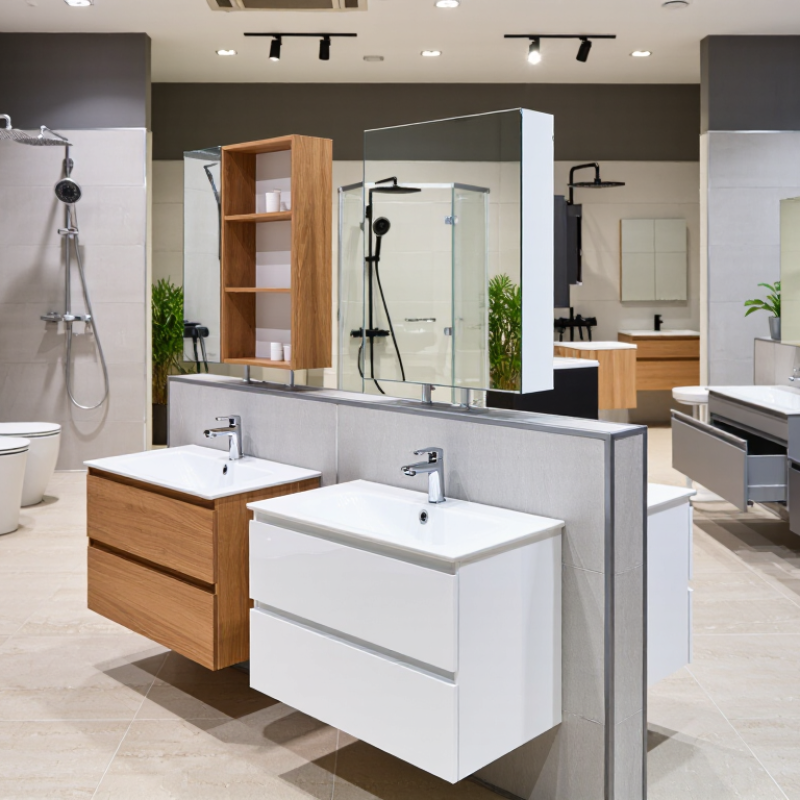
A bathroom collection is a coordinated group of fixtures and fittings, not just products with matching finishes. It commonly includes toilets, basins, faucets, shower systems, and accessories. For buyers, compare the technical details behind the appearance: toilet rough-in dimensions, basin mounting style, faucet connection size, and replacement-part availability. A collection can look unified on a screen but feel mismatched once installed.
Toilets rated at 1.28 gallons per flush (gpf) are a key category. The U.S. Environmental Protection Agency’s WaterSense Specification for Tank-Type Toilets sets this limit, at least 20% below the federal 1.6 gpf standard, while requiring performance testing. Faucets deserve equal scrutiny. EPA’s WaterSense Specification for Bathroom Sink Faucets sets a maximum flow rate of 1.5 gallons per minute, compared with the federal standard of 2.2 gpm. Small differences matter. Buyers should also check faucet reach against basin depth; a high spout can splash in a shallow bowl. Water efficiency is measurable, but comfort is less tidy. Test controls, review installation requirements, and verify that the selected parts work together before approving a full collection.
Bathroom Collection Water-Use Benchmarks
Key bathroom fixtures include toilets, faucets, and showerheads. This chart shows the maximum water-use rates for WaterSense-labeled products.
WaterSense criteria: toilets use no more than 1.28 gallons per flush (gpf), bathroom faucets no more than 1.5 gallons per minute (gpm), and showerheads no more than 2.0 gpm. Because toilets are measured per flush while faucets and showerheads are measured per minute, compare rates only within the same fixture type.
Explore China’s Bathroom Manufacturing Hubs and Their Product Specialties
China’s bathroom supply base is not concentrated in one city. Foshan in Guangdong is widely associated with ceramic tiles and sanitaryware, while nearby Chaozhou has many toilet and basin producers. Buyers can compare glaze tone, rim shape, and carton protection across factories. Small differences show up after installation.
Kaiping and other parts of Jiangmen are known for faucet and shower-fitting production. Zhejiang’s Taizhou also has suppliers making faucets, valves, and bathroom hardware. These clusters can simplify sampling and sourcing, but location alone does not prove factory capability. Ask for a current product list, material specifications, and test records for the exact model. Details matter. A polished showroom is not a production audit.
During a factory visit, check machining marks under faucet handles and ceramic pinholes under side lighting. Inspect how spare parts are packed. Request a sample from the production line planned for your order. Confirm finish consistency, thread dimensions, and packaging before approving bulk production. The regional map is useful, but imperfect: trading offices and factories may be in different provinces. Verify the manufacturing address and keep approval notes. Even experienced teams miss small changes between samples and shipment.
Check Supplier Compliance with 1.28 gpf and 2.0 gpm Water-Efficiency Benchmarks
China Top Bathroom Collections Suppliers for Buyers
For buyers comparing bathroom collections, water-efficiency figures are a practical first screen. Check toilets against 1.28 gallons-per-flush and showerheads against 2.0 gallons-per-minute. The U.S. EPA’s WaterSense specifications set these limits for labeled products. Its guidance says efficient toilets use at least 20% less water than the federal 1.6-gpf baseline, while labeled showerheads use at least 20% less than conventional 2.5-gpm models. Ask suppliers for model-specific test documents, not only catalog claims.
There are useful savings, too. EPA estimates that replacing older toilets with WaterSense-labeled models can save an average family nearly 13,000 gallons annually. Efficient showerheads can save about 2,700 gallons per year. These are estimates, not promises for every household; occupancy, shower length, and existing fixtures affect results. Small details matter.
A supplier’s specification sheet should show flush volume, flow rate, testing method, and the exact product model. Compare samples under realistic pressure, and check that packaging and test records match the item being quoted. A spreadsheet can miss that. I would also review flushing performance and spray comfort before placing a large order: hitting a water target is valuable, but a fixture that users dislike may not stay in service. EPA WaterSense product specifications and savings guidance provide a dependable baseline for those checks.
Evaluate Samples, Shipping Costs, Warranty Terms, and After-Sales Support
When comparing bathroom collection suppliers in China, request physical samples before approving a large order. Check the glaze under bright and warm light; small color shifts can be hard to spot in photographs. Measure the basin, tap holes, and drain opening against your installation drawings. Feel exposed edges and inspect the underside, too. Small details matter. A sample can look excellent while the production finish varies, so ask how samples are matched to batch quality.
Shipping quotes need more than a headline freight rate. Confirm carton dimensions, gross weight, protective packaging, and whether inland transport to the port is included. Ask for separate estimates for sample delivery and the full shipment. Compare the same route and delivery terms across suppliers. Costs can change with volume and timing, so treat early estimates as provisional. Request photos of packed goods and clarify how damaged cartons are documented on arrival.
Read warranty terms closely: coverage period, start date, exclusions, and the process for reporting defects should be clear in writing. Ask whether replacement parts, such as hinges or drain fittings, remain available after the order. Who pays freight for a verified defect? Ask again. Also check the after-sales contact, expected response time, and evidence required for a claim. A vague promise of “support” is not enough. Some details may still be uncertain until production begins; record unanswered questions before paying a deposit.