What Are the Top Luxury Royal Bed Styles in 2026?

In 2026, a Luxury Royal Bed can make a bedroom feel composed, theatrical, or simply more comfortable. The leading styles range from tall, button-tufted headboards to carved frames, upholstered silhouettes, and airy canopy designs. Look closely: a hand-finished wood edge, neatly aligned fabric seams, and a well-proportioned headboard can matter more than a grand label. William Morris, the influential British designer and writer, offered a useful standard: “Have nothing in your houses that you do not know to be useful, or believe to be beautiful.” His words were not about royal beds specifically, but they remain a thoughtful test for choosing one.

This guide explores the styles shaping luxury bedrooms in 2026, while separating lasting design choices from details that may date quickly. Expect practical comparisons of frame materials, headboard shapes, upholstery, canopy proportions, and decorative finishes. A deep velvet headboard may look inviting beneath warm bedside lighting; in a small room, though, it can feel imposing. Scale matters. So does the less glamorous work: checking mattress dimensions, frame support, fabric care, and how the bed will enter the room. Some styling choices are subjective, and a dramatic bed will not suit every home. That is worth admitting. The aim is not to crown one universal winner, but to help readers identify a Luxury Royal Bed that balances visual presence, construction, and everyday use.
What Are the Top Luxury Royal Bed Styles in 2026?

Defining Luxury Royal Bed Styles in 2026

Defining Luxury Royal Bed Styles in 2026

A royal bed is less about imitation and more about proportion, material, and presence. In 2026, defining details include a tall upholstered headboard, carved or fluted timber, layered natural fabrics, and a frame that anchors the room. Choose tactile linen, brushed cotton, or velvet for contrast; keep metallic trim restrained. The Grand View Research luxury furniture report valued the global market at USD 25.41 billion in 2023 and projected 5.1% annual growth through 2030. That signals demand, not a guarantee of lasting quality. Craftsmanship still needs inspection.

Comfort should shape the silhouette. A deep frame may look regal, yet it can crowd a narrow room or make bedside access awkward. Measure the mattress, walking space, and headboard height before choosing ornate details. The Global Wellness Institute’s 2024 Global Wellness Economy Monitor reported a USD 6.3 trillion wellness economy in 2023. It does not prove that a grand bed improves sleep, but it reflects growing interest in restorative home environments. Consider a supportive base, breathable bedding, and warm, low-glare lighting. Less drama, perhaps. The small flaw in many “royal” designs is prioritizing appearance over daily use. A bed should feel composed at dusk and practical at dawn.

What Are the Top Luxury Royal Bed Styles in 2026? — Defining Luxury Royal Bed Styles

Canopy, four-poster, and richly upholstered beds are classic royal-inspired styles. Since frame design does not determine mattress size, this chart compares standard U.S. mattress widths—a practical guide when choosing the footprint for a luxury bed. Frame dimensions may be larger than the mattress.

How Royal Bed Designs Evolved Across Eras

Royal beds began as practical shelters as much as symbols of rank. In medieval halls, curtains helped retain warmth and offered privacy. Later, Renaissance and Baroque frames grew taller, with carved posts and rich fabrics displaying wealth. The bed became a room’s centrepiece. Sometimes, quite literally.

By the Victorian era, layered upholstery and elaborate headboards made beds feel heavier and more enclosed. Twentieth-century interiors favored cleaner lines and simpler construction. Today’s luxury designs borrow from both: a sculptural canopy may sit above a low, restrained platform, while linen, velvet, and carved timber add tactile contrast. That mix can feel elegant, though historical details sometimes become mere decoration.

The market reflects continuing investment in bedroom furnishings. Grand View Research’s 2024 Bedroom Furniture Market analysis valued the global category at about US$246 billion in 2023 and forecast 4.1% annual growth through 2030. This is market-wide data, not proof that ornate beds are gaining popularity. Still, it helps explain why makers keep revisiting heritage forms. In a well-designed room, the frame’s height, fabric weight, and visible joinery matter more than a crown-like silhouette. A little restraint helps. And not every historical detail deserves revival.

What Are the Top Luxury Royal Bed Styles in 2026? — How Royal Bed Designs Evolved Across Eras

Editorial guide: These styles are selected for their historical significance and continuing design appeal; the order is not a sales or market ranking.

Style Historical era and context Recognizable design features Traditional materials and finishes Luxury interpretation for 2026
Medieval Canopied Bed Medieval Europe; enclosed bed spaces offered privacy and helped provide warmth in large, drafty interiors. A substantial wooden frame, raised sleeping platform, curtains, and a canopy or tester above the bed. Oak and other locally available hardwoods; woven wool, linen, and other heavy textiles. Use a tall, restrained timber frame with full-height linen or wool curtains, while keeping the detailing and palette quieter than a historical reconstruction.
Renaissance Four-Poster Bed Renaissance Europe, especially from the 15th to 17th centuries; elaborate beds reflected household status as well as serving practical needs. Four prominent posts supporting a tester, often with carved details, a decorative headboard, and textile hangings. Carved hardwoods, including oak or walnut in many European examples; embroidered or woven hangings. Choose sculptural posts, refined carving, and a coordinated canopy in high-quality natural fabric rather than excessive ornament.
French Court Bed (Lit à la Duchesse) French court interiors of the 17th and 18th centuries; the bed could serve as an important element of formal display. A canopy supported from the wall or ceiling rather than by four posts; the fabric canopy may extend over the bed and be paired with matching curtains. Gilded or painted wood, carved ornament, silk, damask, and decorative fringe in historic examples. Adapt the wall-mounted canopy to a contemporary room with tailored drapery, subtle trim, and a pared-back upholstered bed.
Baroque State Bed 17th- and early 18th-century European courts; ceremonial beds could be associated with public audiences and courtly rituals. A prominent headboard, a deep canopy, layered curtains, dramatic symmetry, and elaborate surface decoration. Carved and gilded timber, velvet, silk, brocade, and decorative embroidery. Retain the dramatic silhouette but limit gilding and pattern; use one richly textured textile as the focal point.
Georgian Neoclassical Four-Poster 18th-century Britain and related neoclassical interiors; design drew inspiration from classical forms and balanced proportions. More controlled, symmetrical lines than many Baroque beds; posts may be tapered or turned, with restrained carving. Mahogany and other hardwoods, with polished finishes and finely woven bed hangings. Pair a well-proportioned frame with clean-lined bedding and discreet classical detailing for a formal but uncluttered bedroom.
Victorian Revival Canopy Bed 19th-century Victorian interiors; the period included varied historic revivals and richly layered decoration. Tall frames, carved or turned posts, pronounced headboards, and generous use of decorative textiles. Walnut, mahogany, and other hardwoods; carved details, upholstery, and patterned fabrics. Borrow the height and craftsmanship while simplifying the carving and mixing traditional structure with calm, contemporary textiles.
Art Deco Statement Bed 1920s and 1930s; Art Deco design favored geometric forms, strong outlines, and carefully finished surfaces. A bold, often symmetrical headboard; stepped or curved profiles; geometric inlays or contrasting materials. Veneered woods, lacquer, polished metal, glass, and upholstered panels appeared in period furniture and interiors. Use a sculptural headboard, restrained metallic accents, and streamlined bedding to evoke the era without turning the room into a period set.
Contemporary Modern-Royal Bed A 21st-century interpretation rather than a single historical style; it combines references to formal beds with current interior design. A generous upholstered headboard, balanced proportions, carefully finished details, and an optional simplified canopy or tester. Solid wood, responsibly sourced timber, linen, wool, cotton, and durable upholstery materials. Prioritize craftsmanship, long-lasting materials, comfortable proportions, and a small number of historical references tailored to the room.

Leading Royal Bed Styles and Their Distinctive Features

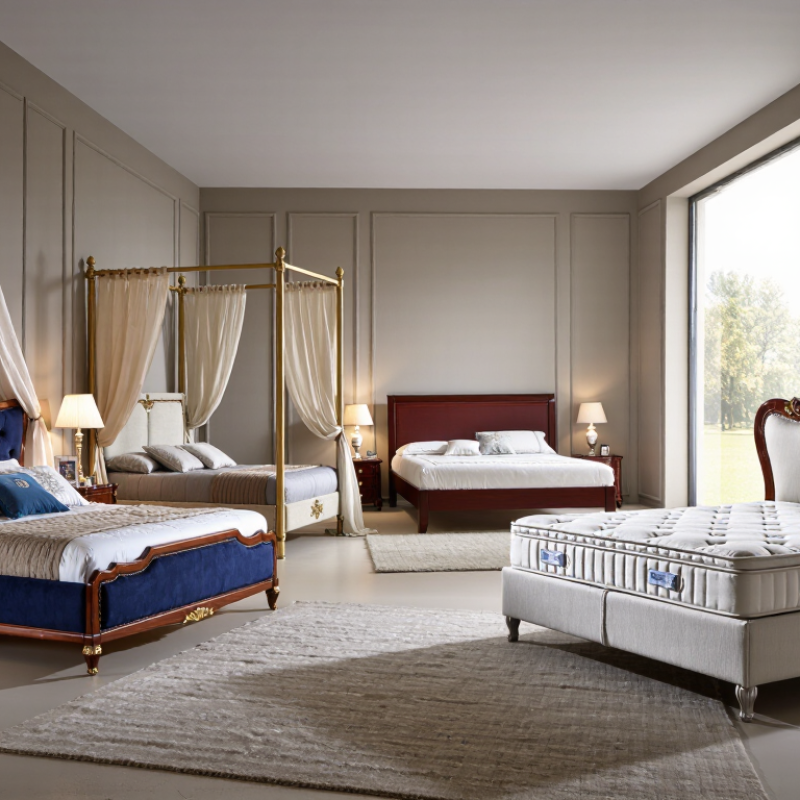
Royal bed styles are defined by silhouette as much as ornament. A canopy bed creates a dramatic frame, with tall posts and fabric panels that soften light and add privacy. It suits rooms with high ceilings, but heavy drapery can make a small space feel crowded. Scale matters. A four-poster bed offers similar height with a more open outline; carved wood or restrained metalwork can provide a regal focal point without enclosing the room.

A sleigh bed uses curved head and footboards for a sculptural, traditional profile. Its broad shape needs clear floor space. Upholstered wingback beds bring a quieter kind of grandeur, using deep buttoning, plush fabric, and a tall headboard for a comfortable reading position. For a more ornate look, carved frames emphasize craftsmanship, though elaborate details can be difficult to pair with changing décor. These distinctions are practical, not absolute; even a beautiful bed can feel oversized beside narrow walkways.

The wider market offers useful context, but not a verdict on taste. Grand View Research’s Bedroom Furniture Market Size, Share & Trends Analysis Report estimated the global bedroom furniture market at $122.48 billion in 2022, with a projected 5.7% compound annual growth rate from 2023 to 2030. That figure covers bedroom furniture broadly, not royal beds alone. For choosing a style, measure the room, check ceiling height, and consider how the headboard feels against the wall. Sometimes less ornament feels more luxurious.

Materials, Craftsmanship, and Details That Shape Their Appeal

What Are the Top Luxury Royal Bed Styles in 2026?

Luxury royal beds in 2026 draw attention through materials and careful construction, not just height or ornament. Solid hardwood frames offer weight and stability, while upholstered headboards soften the room. Velvet, linen, and textured cotton each create a different feel. A tightly woven fabric may wear better in daily use than a delicate pile. Touch matters.

Craftsmanship shows in the details: joined corners that sit flush, evenly spaced tufting, and carved edges with smooth transitions. Hand-finishing can reveal subtle variations in tone and grain. Those differences may add character, though they are not always signs of better quality. Ask how the frame is supported, what the upholstery contains, and whether the finish can be maintained. Small things matter.

Canopy frames and sculpted headboards remain striking choices, but scale deserves honest thought. A tall frame can overwhelm a low ceiling, and elaborate carving may collect dust. I would not mistake decoration for durability. Check that the bed feels steady when gently tested, and look closely at seams and joints. A beautiful silhouette should still work with the room, the bedding, and everyday routines.

How to Select a Royal Bed Style for a Modern Bedroom

A royal bed can anchor a modern bedroom without making it feel like a palace set. In 2026, popular looks pair tall upholstered headboards, softly curved frames, or slim canopy posts with restrained colors. Deep green velvet feels dramatic; warm ivory linen keeps the room lighter. Choose a style that suits your ceiling height and daily habits, not only a photo. Scale matters.

Before buying, measure the bed, bedside clearance, and doorways. A carved frame may look elegant online but crowd a compact room. Check upholstery care instructions, frame materials, and mattress compatibility. These details are less exciting, but they affect comfort and upkeep.

Tips: Tape the bed’s outline on the floor to judge its footprint. Compare the headboard height with nearby windows and lamps. Keep bedding simple if the frame has ornate details. A canopy can add presence, though it may feel heavy under a low ceiling. Test it first. And if you love a dramatic style, balance it with clear surfaces, warm lighting, and one quieter texture rather than matching every piece.

Back to top