Vinyl is not merely a nostalgic format. It is a physical recording that turns tiny groove patterns into sound. The Vinyl Player Turntable makes that process visible: a disc spins, a stylus follows its grooves, and a cartridge converts movement into an electrical signal. The result depends on several small parts working together. Even a dusty record can reveal how sensitive the system is.
The format also has measurable staying power. The Recording Industry Association of America reported that U.S. vinyl album revenue reached about $1.4 billion in 2024, marking an eighteenth consecutive year of growth. That figure shows continued demand, though revenue alone cannot explain why listeners choose records. Some value the artwork and ritual; others prefer the sound. Neither reason tells the whole story.
This guide explains what a Vinyl Player Turntable is, identifies its main components, and follows the signal from groove to speaker. It also distinguishes the turntable from the full record-playing setup, which may require amplification and speakers. The details matter. A turntable does not automatically produce room-filling sound on its own. Setup choices, record condition, and stylus alignment can all affect playback. These basics are easy to overlook, and even experienced listeners sometimes disagree about what “better” sound means.
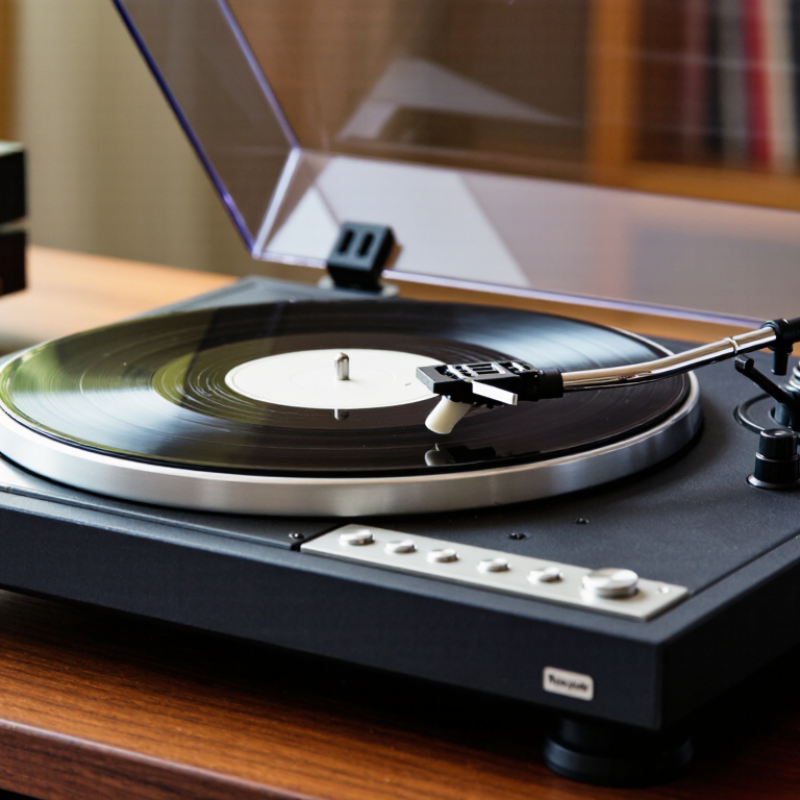
A vinyl player turntable is the part of an audio system that spins a record and reads the tiny grooves pressed into its surface. The record rests on a flat platter, usually covered by a soft mat. A motor turns the platter at a steady speed, while a tonearm holds a cartridge above the record. At the cartridge’s tip, a small stylus follows the grooves.
Those grooves contain physical variations that represent sound. As the stylus moves through them, it vibrates. The cartridge converts those vibrations into an electrical signal, which must be amplified and sent to speakers or headphones. Some turntables include a built-in preamplifier; others need a separate one. The distinction matters when choosing equipment, though it can be confusing at first.
A turntable is not always a complete vinyl player. Some models need extra components to produce audible sound. Setup also affects performance: the turntable should sit on a stable, level surface, and the stylus must be clean and properly aligned. Even small adjustments can change how a record sounds. There is a quiet appeal in placing the needle by hand. Still, the process is less effortless than pressing play, and I find that part easy to underestimate.
A turntable’s plinth supports the motor, platter, tonearm, and wiring. It should sit level on a stable surface; even a slight tilt can affect playback. The motor turns the platter at a controlled speed, commonly 33⅓ or 45 revolutions per minute. A rubber mat cushions the record and helps it grip the platter. The record may look still at a glance. It is not.
The tonearm holds the cartridge, which carries the stylus. As the stylus follows the record groove, the cartridge converts its movement into an electrical signal. The counterweight balances the arm, while the tracking force keeps the stylus seated in the groove. Too much force can increase wear; too little may cause skipping. Check the cartridge maker’s guidance, since there is no single ideal setting for every setup. A phono preamplifier then boosts and equalizes the small signal before it reaches an amplifier or powered speakers. One detail is easy to overlook: some turntables include this preamp, and others do not.
The components still matter in a growing market. The Recording Industry Association of America reported 43.4 million vinyl LP units shipped in the United States in 2023, in its 2023 Year-End Music Industry Revenue Report. That figure does not measure sound quality, of course. It does explain why basic setup knowledge remains useful. A bubble level and a careful stylus check can prevent avoidable problems. I’d still recheck the arm after moving the table. Small errors happen.
| Component | What It Is | How It Works | Why It Matters |
|---|---|---|---|
| Plinth | The turntable’s base or chassis. | Supports the rotating platter and tonearm while helping limit unwanted vibration. | A stable, well-isolated base can help reduce rumble and resonance reaching the stylus. |
| Platter | The flat, rotating surface that supports the record. | A motor turns it at the selected playback speed; a mat usually sits between the platter and record. | Consistent rotation helps preserve musical pitch and timing. |
| Motor and Drive System | The mechanism that spins the platter, commonly using belt drive or direct drive. | A belt-drive system transfers motion through a belt; a direct-drive system couples the motor more directly to the platter. | Drive design affects speed stability, startup behavior, and maintenance requirements. |
| Tonearm | The pivoting arm that holds and guides the cartridge across the record. | It allows the stylus to follow the record groove while maintaining the intended tracking force and alignment. | Correct setup helps the stylus track accurately and can reduce record and stylus wear. |
| Cartridge | The small assembly attached to the end of the tonearm that converts groove movement into an electrical signal. | Movement of the stylus causes a generator inside the cartridge to produce a low-level audio signal. | Its design and condition influence output level, compatibility, and sound reproduction. |
| Stylus | The tiny tip that makes contact with the record groove. | As it traces the groove’s changing shape, it vibrates and transfers that motion to the cartridge. | A clean, correctly fitted stylus is essential for reliable tracking and helps protect records. |
| Counterweight and Tracking-Force Adjustment | Parts at the rear of the tonearm used to balance the arm and set downward force. | The counterweight is adjusted so the stylus applies the tracking force recommended for the cartridge. | Incorrect force can cause mistracking, distortion, or unnecessary wear. |
| Anti-Skate Control | An adjustment that counteracts the inward pull on the tonearm as a record plays. | It applies a small outward force to help keep the stylus centered in the groove. | Proper adjustment can support more even tracking across the groove walls. |
| Phono Preamp | A circuit that amplifies and equalizes the cartridge’s low-level signal. | It applies the standardized RIAA playback equalization and raises the signal to a level suitable for many audio inputs. | A turntable needs a phono input or a separate phono preamp if one is not built in. |
| Speed Selector | A control for choosing the record’s rotation speed, commonly 33⅓ or 45 revolutions per minute. | It changes the platter’s operating speed to match the record’s specified playback speed. | Using the wrong speed changes the record’s pitch and playback duration. |
A turntable rotates a record on a flat, circular platter. A small spindle at the platter’s center fits through the record’s hole, keeping it aligned as it spins. Underneath, an electric motor supplies the motion. In a belt-drive design, a flexible belt transfers the motor’s movement to the platter; in a direct-drive design, the motor turns the platter more directly. Each approach can work well when properly built and maintained.
The selected speed matters. Many records are designed for 33⅓ or 45 revolutions per minute, and the turntable must hold that speed steadily. A belt that has stretched, dust on moving parts, or an uneven surface can affect rotation. You may notice the problem as wavering pitch in a sustained piano note. Not ideal. Place the turntable on a stable, level surface, and use its speed setting to match the record.
As the platter turns, the record moves beneath the stylus at a consistent rate. The stylus follows the tiny grooves, converting their physical variations into vibrations that a cartridge changes into an audio signal. Rotation alone does not guarantee good sound; alignment, tracking force, and a clean record also matter. Even a slight setup error can be audible, though not every fluctuation is easy to diagnose by ear.
A turntable’s motor rotates the platter at a steady speed. Common record speeds are 33⅓, 45, and 78 revolutions per minute (RPM). As the record spins, the stylus follows the groove to read the recorded sound.
A vinyl record stores sound as tiny changes in the walls of a spiral groove. As the record turns, a stylus, often called a needle, rests in that groove. Its tip is small enough to follow the fine ridges and curves pressed into the vinyl. The movement is delicate. Dust or a worn stylus can interfere.
The groove’s changing shape makes the stylus vibrate. Those vibrations travel along a thin cantilever to the cartridge, where a small generator converts motion into an electrical signal. That signal is much quieter than the sound needed to drive speakers, so a phono preamp boosts it and restores the tonal balance used during recording. Then an amplifier and speakers turn it back into audible sound. A faint hiss or soft crackle may accompany playback; it does not always mean something is broken.
Tracking force matters. Too little pressure can make the stylus lose contact and distort the sound, while excessive force may increase wear. A level turntable and clean record help the tip follow the groove steadily. I still find the process slightly uncanny: a tiny point tracing a spiral can reproduce a drum’s sharp attack or a singer’s breath. It is not perfect, though. Small setup errors can change what you hear.
A vinyl record stores sound as tiny changes in a spiral groove. As the disc turns, the stylus follows those changes, moving from side to side and sometimes up and down. The motion is extremely small. The cartridge converts it into a changing electrical voltage, much like a microphone converts movement into a signal. Dust, worn grooves, and imperfect alignment can add noise or distortion, so careful setup matters.
That voltage is weak, so it passes through a phono preamplifier before reaching the main amplifier. The preamp boosts the signal and applies RIAA equalization, correcting the frequency balance used when records are cut. The amplifier then drives the speakers, whose cones move air and create sound waves. You can hear the chain at work: a faint crackle between tracks, then a bass note pressing the speaker cone outward. It is not a perfect copy. The RIAA’s 2023 Year-End Music Industry Revenue Report recorded $1.4 billion in U.S. vinyl revenue, showing the format’s continued commercial presence, not proving any particular sound quality. A turntable’s final sound depends on the record, cartridge, setup, and room. Even a tiny tracking error can matter.
For an immediate response, please call this
number 45038523
Price: