Why Are Bathroom Accessories Essential for Every Bathroom?

Bathroom Accessories may seem like finishing touches, but they shape how a bathroom works each day. A towel bar keeps damp towels off the floor. A soap dispenser makes the sink easier to use. A well-placed shelf keeps shampoo within reach, rather than balanced on a slippery tub edge. Small details matter.

The value is practical, not merely decorative. The U.S. Environmental Protection Agency’s WaterSense program reports that certified bathroom sink faucets and aerators use at least 20% less water than standard models while meeting performance requirements. That figure applies to water-saving fixtures, not every accessory. Still, it shows how choosing bathroom products carefully can support everyday efficiency. The Centers for Disease Control and Prevention also recommends grab bars near toilets and in bathing areas as part of its home-safety guidance. Placement matters; a bar that looks sturdy but is poorly installed may offer little confidence.

Good accessories can make routines more comfortable, organized, and accessible for different household members. They can also help a small bathroom feel less cluttered, especially when storage is limited. Yet more products do not automatically mean a better room. An overcrowded counter or awkwardly positioned holder can create new frustrations. That is worth considering. This guide explores why Bathroom Accessories matter, how to choose them for real daily use, and where thoughtful design can make a noticeable difference.
Why Are Bathroom Accessories Essential for Every Bathroom?

What Bathroom Accessories Include and How They Are Used

Bathroom accessories are the practical items that support everyday routines, from washing and grooming to keeping the floor dry. They include towel bars and hooks, soap dispensers, toothbrush holders, toilet-paper holders, mirrors, shelves, bath mats, and waste bins. Some are fixed to walls; others sit on a counter or floor. A towel hook near the shower makes it easier to hang a damp towel, while a shelf keeps shampoo bottles off the tub edge. Small details matter.

Each accessory works best when placed where it is actually needed. Keep hand towels beside the sink, and choose a soap dispenser that is easy to refill and clean. A mirror needs clear lighting, while a non-slip bath mat should lie flat and dry between uses. In a shared bathroom, separate cups or labeled storage can reduce mix-ups. For support near a tub or toilet, a grab bar must be securely mounted to suitable backing; a suction cup holder is not a substitute. A matching set can look tidy, but it may not suit every room. I have found that an extra hook is often more useful than another decorative tray. Keep it dry. Regularly wipe accessories and check wall-mounted fittings for looseness or rust.


Why Bathroom Accessories Matter

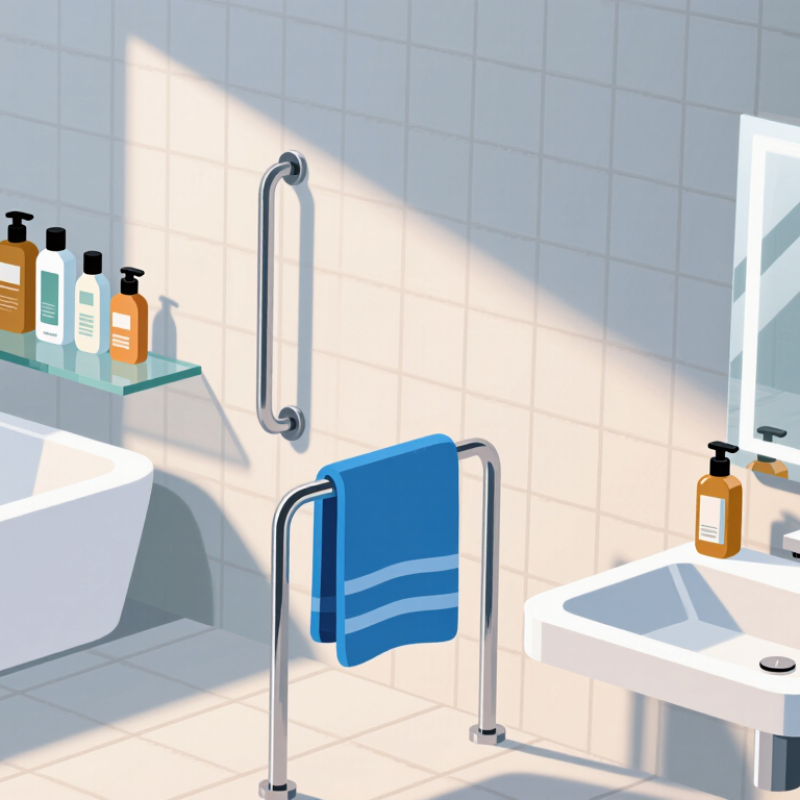
Accessories such as grab bars, mirrors, and dispensers support safety, comfort, and everyday use. These ADA reference measurements show selected accessibility limits in inches above the finished floor.

Grab bars: 33–36 in. (chart shows the upper end); lavatory rim: 34 in. maximum; mirror’s reflective surface bottom: 40 in. maximum when above a lavatory or counter; operable parts: 48 in. maximum for an unobstructed forward reach. These are accessibility criteria, not universal placement instructions. Source: 2010 ADA Standards for Accessible Design, Sections 308, 603, 606, and 609.

How Accessories Support Hygiene and Daily Routines

Bathroom accessories shape the small actions that keep a bathroom cleaner. A wall-mounted soap dispenser keeps soap within reach of the sink, while a towel hook helps prevent damp towels from gathering on the counter. A covered bin, toilet brush, and non-slip bath mat also give everyday items a clear place. Small details matter. The Centers for Disease Control and Prevention (CDC) reports that handwashing can reduce diarrheal illness by 23–40% and respiratory infections by 16–21%. Accessories cannot replace good handwashing, but convenient placement can make the routine easier to follow.

Choose pieces that are easy to clean and suited to the room’s layout. Smooth, wipeable surfaces leave fewer awkward corners for grime, and a shelf near the shower can keep bottles off the floor. In a shared bathroom, separate hooks or baskets can help keep personal towels and grooming items apart. Yet more accessories do not always mean better hygiene. Crowded counters collect clutter, and a poorly placed towel bar may leave fabric slow to dry. The CDC’s handwashing guidance stresses washing with soap and clean running water; a dispenser placed beside the sink supports that simple habit. It is worth noticing which items people actually use, then adjusting the layout when daily routines reveal a problem.

How Bathroom Accessories Improve Safety and Accessibility

Wet floors and limited movement can make a bathroom unexpectedly risky. A grab bar beside the toilet or within the shower offers a stable handhold during transfers. It must be firmly secured to suitable wall framing or with an appropriate anchoring system. Suction handles are not a dependable substitute for permanent support. Small details matter.

A non-slip bath mat can help reduce slipping, but it may shift if its backing is worn or the floor is uneven. Check it often, and keep its edges flat. A shower seat and handheld showerhead let someone wash while seated, which can reduce fatigue and awkward reaching. Placement matters. Leave enough room to enter, turn, and stand safely.

Accessibility depends on the person using the room. Put towels, soap, and controls within comfortable reach to limit bending and stretching. Contrasting colors around steps or fixtures may also make edges easier to notice. Still, accessories cannot fix every layout. It is easy to assume one grab bar suits everyone, but its position should match the user’s height, balance, and movement. When mobility needs are complex, an occupational therapist or qualified installer can help assess the space.

How Storage Accessories Reduce Clutter and Use Space Efficiently

Bathroom accessories do more than finish a room; well-chosen storage keeps daily items visible and surfaces usable. A narrow shelf above the toilet can hold spare tissue, while a wall-mounted cup keeps toothbrushes off a crowded sink. In a small bathroom, using vertical space often works better than adding another floor-standing cabinet. Keep frequently used items within easy reach, and store backup supplies higher or inside a closed bin. Small changes matter.

Tips: Measure the wall and check door swings before buying shelves or hooks. Use a shower caddy for shampoo bottles, but avoid overloading it; heavy containers can loosen suction mounts. A lidded basket under the sink can group cleaning cloths and spare soap without making the cabinet feel chaotic. Leave a little empty space. It helps you notice what you actually use.

Storage only helps when it suits real routines. Open trays make everyday products easy to grab, yet they can look messy if too many items collect there. I learned that adding organizers without sorting first simply gives clutter new compartments. Choose moisture-resistant materials, wipe shelves regularly, and review stored products every few months. A practical setup may not look perfectly styled, and that is fine. It should make the morning rush calmer.

How Materials and Maintenance Affect Durability and Value

Bathroom accessories endure steam, splashes, and daily handling, so material choice affects both their lifespan and appearance. A towel bar near the shower may stay damp long after the room feels dry. Stainless steel resists corrosion, while solid brass is sturdy but can still tarnish if its finish is neglected. Plated surfaces may look polished at first, yet harsh cleaners can wear them down. Ceramic hooks are easy to wipe, though a hard knock can chip them. Wood brings warmth, but needs proper sealing in humid rooms. Small details matter.

Maintenance helps protect that investment. Wipe metal fittings with a soft cloth and mild soap, then dry them to limit water spots. Avoid abrasive pads; they can scratch finishes and create places for grime to collect. Check mounting screws now and then, especially on towel bars carrying heavy, damp towels. A loose fitting can strain the wall as well as the accessory. I once thought regular cleaning meant using stronger products; it often did more harm than good. Gentle care is less dramatic, but usually more useful. Well-chosen accessories can reduce replacement costs, although durability still depends on installation, water exposure, and everyday use.

Why Are Bathroom Accessories Essential for Every Bathroom? — How Materials and Maintenance Affect Durability and Value

Accessory Common Materials Moisture and Corrosion Performance Practical Maintenance Durability and Value Considerations
Towel bar or hook Stainless steel, brass, zinc alloy, or coated steel Stainless steel and brass generally resist bathroom moisture well. Coatings can protect other metals, but damage to the finish may expose the base metal. Wipe dry regularly and clean with a soft cloth and mild soap. Avoid abrasive pads that can scratch protective finishes. Strong mounting and corrosion-resistant materials help the fitting stay secure and presentable. A durable finish can reduce replacement needs and support a well-maintained appearance.
Shower caddy or shelf Stainless steel, aluminum, coated steel, or plastic Stainless steel and aluminum are commonly chosen for wet areas. Coated steel can corrode if its coating is chipped; plastic does not rust but may become brittle over time. Remove soap residue and standing water. Check corners, joints, and mounting points for mineral buildup or coating damage. Open designs that drain easily are less likely to retain water and residue. Material choice and secure installation affect both service life and everyday convenience.
Soap dispenser or dish Ceramic, stainless steel, glass, or plastic Ceramic, glass, and stainless steel do not rust, though metal components such as pumps may vary. Plastic is moisture-resistant but can stain or wear with use. Rinse away soap deposits and dry the base to prevent residue or water marks. Clean pump openings to help prevent clogging. Easy-to-clean surfaces help maintain a hygienic appearance. Refillable dispensers can reduce disposable packaging, while sturdy construction can avoid frequent replacement.
Toilet paper holder Stainless steel, brass, zinc alloy, or coated metal Materials with corrosion-resistant finishes are suitable for humid rooms. Repeated contact with water and cleaning products can wear some coatings. Use a damp, soft cloth and mild cleaner. Dry after cleaning and periodically check that the holder remains firmly attached. A stable mount prevents loosening during daily use. A finish that coordinates with other fittings can also contribute to a consistent, cared-for bathroom.
Toilet brush and holder Plastic, stainless steel, ceramic, or combinations of these materials Plastic and ceramic holders resist rust. Stainless steel can perform well in humid conditions, while trapped moisture or damaged finishes may affect some metal parts. Rinse the brush after use, allow it to dry, and clean the holder regularly. Replace a worn brush head when it no longer cleans effectively. Drainage and ventilation help limit trapped moisture and odors. A replaceable brush head can extend the useful life of the holder and reduce waste.
Bathroom mirror shelf or cabinet hardware Stainless steel, aluminum, brass, or coated metal Corrosion-resistant hardware is useful in humid conditions. Edges, fasteners, and joints may be more vulnerable if water repeatedly collects there. Wipe splashes promptly and keep joints dry. Use cleaners suitable for the finish and avoid spraying harsh chemicals directly onto hardware. Good-quality fittings and correct installation help doors and shelves function reliably. Well-maintained hardware supports both usability and the overall condition of the bathroom.

Note: Actual durability depends on material grade, finish quality, installation, water exposure, cleaning products, and frequency of use. Follow the care instructions supplied with each product.

Back to top