A Dancing Water Fountain can turn an ordinary public space into a memorable, living experience. Water rises, pauses, twists, and falls in coordinated patterns. Light catches each movement, creating changing reflections across stone, glass, and nearby faces. This visual rhythm can strengthen a hotel entrance, shopping center, resort, plaza, or cultural destination.
Mark Fuller, founder of WET Design and a leading water-feature designer, once said, “Water is the most dramatic and powerful element in the world.” His observation explains the appeal of a Dancing Water Fountain. It combines engineering precision with emotional impact. Programmable pumps, underwater lighting, filtration systems, and carefully designed nozzles control the performance. When these elements work together, a fountain can support branding, visitor engagement, and nighttime atmosphere without overwhelming the surrounding architecture.
Good design requires more than attractive animation. Project teams must examine water consumption, maintenance access, pump noise, splash control, weather conditions, and public safety. A fountain that looks impressive on opening day may become expensive if technicians cannot reach its equipment easily. That is a real concern. It deserves honest planning. Designers should also test the choreography from different viewing distances, because a pattern that looks elegant nearby may appear weak from across a plaza. With experienced engineering, durable materials, and realistic maintenance planning, a Dancing Water Fountain can become a dependable landmark rather than a short-lived decoration.
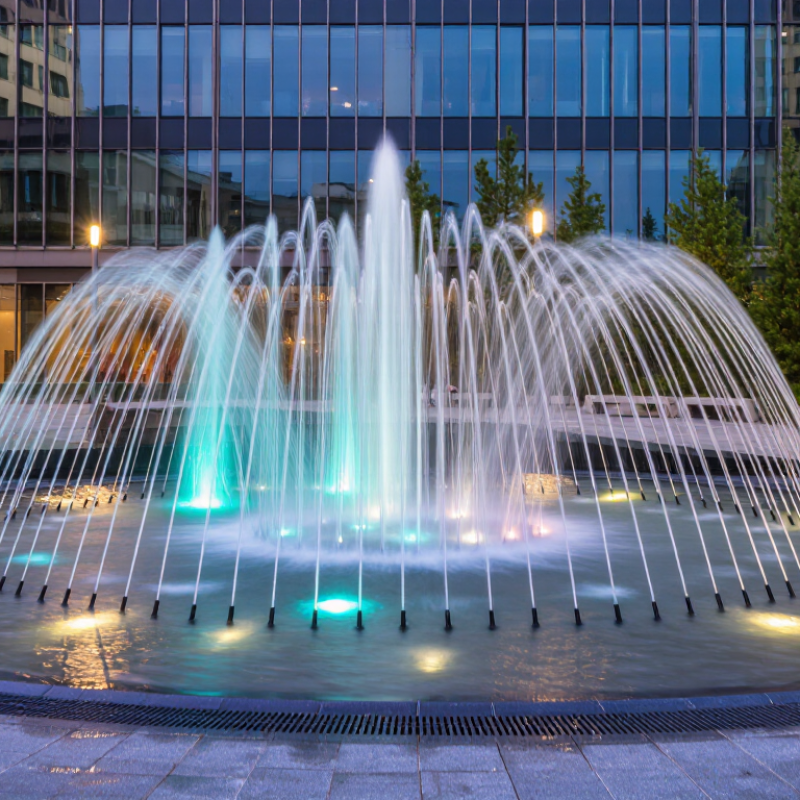
A dancing water fountain is an engineered display where water jets move in timed patterns. Pumps, valves, nozzles, lights, and digital controls work together. Some systems respond to music, while others follow programmed sequences. The water may rise, curve, pulse, or cross in midair. It looks playful, but careful hydraulic planning supports every movement.
In a real project, the performance begins with stable water pressure. Pumps deliver water through separate channels, while valves adjust each jet’s timing. Nozzles shape the streams into thin arcs, tall columns, or soft sprays. Waterproof lights can add color after sunset. Sensors may monitor water levels and equipment conditions. Small details matter. A slight pressure difference can make one jet appear weaker than its neighbors.
From a design perspective, a dancing fountain should fit its location, audience, and maintenance plan. A plaza may need broad movement and moderate sound. A hotel entrance might require quieter patterns and refined lighting. I used to think dramatic height created the best effect. That is not always true. Excessive spray can wet nearby paths and increase cleaning work. Reliable designs leave room for inspection, drainage, safe electrical separation, and seasonal adjustments. The most attractive sequence can still fail if technicians cannot reach the valves easily.
A dancing water fountain works through a coordinated hydraulic and control system. A submersible or dry-mounted pump moves filtered water into a manifold. Solenoid valves then open in timed patterns, directing water through nozzles with different heights and shapes. A programmable controller synchronizes valves, lighting, music, and movement sensors. The result looks spontaneous, but every arc follows a programmed sequence.
Water usually returns to the basin and circulates again. Screens and filters capture leaves, grit, and suspended particles before water reaches the pump. This detail matters. A blocked nozzle can ruin an entire performance. Evaporation, splash-out, and cleaning still require replacement water, so a recirculating design is not automatically water-neutral. The 2024 United Nations World Water Development Report emphasizes growing pressure on freshwater resources, supporting careful makeup-water planning. Energy also deserves attention. The U.S. Department of Energy’s pumping-system guidance identifies potential energy savings of 20–50% through correct sizing, control, and maintenance. Variable-speed pumps can reduce flow during quiet periods, though their savings depend on nozzle pressure and choreography.
From field experience, the most reliable designs include access panels, overflow protection, low-water sensors, and manual override controls. They also leave space for maintenance. Too little space becomes an expensive mistake. Hydraulic Institute guidance on pump operating regions reinforces the need to keep pumps within stable performance limits. A fountain should be beautiful, but its hidden mechanics must remain calm, serviceable, and measurable.
A dancing water fountain gives designers several ways to shape movement, sound, and light. Adjustable vertical jets can create a calm curtain or a dramatic central burst. Laminar streams offer precise, glass-like lines across shallow pools. Interactive nozzles can respond to footsteps, music, or programmed timing. The choice should match the site, not merely chase spectacle.
Lighting expands the design after sunset. Energy-efficient LEDs can produce color changes, gradients, and tightly focused highlights. The U.S. Department of Energy reports that LEDs use at least 75% less energy than incandescent lighting and can last up to 25 times longer. That matters for fountains operating every evening. Still, excessive color changes may feel distracting. Subtle control often looks more expensive.
Water management also shapes the design. Recirculating systems, wind sensors, level controls, and filtration reduce unnecessary losses. The United Nations World Water Development Report 2024 notes that agriculture accounts for roughly 70% of global freshwater withdrawals, making responsible water use increasingly important. Designers should calculate splash loss and maintenance access before approving the visual concept.
A beautiful fountain can become a burden when filters are difficult to reach. I have seen ambitious layouts leave too little room for service work. That mistake deserves more attention.
A dancing water fountain can give a public space a stronger sense of identity. Moving jets, timed lighting, and changing heights create a visual landmark without blocking important views. People may pause beside it, take photographs, or meet friends near the sound of water. The space feels active, even when no event is taking place.
People stop. The rhythm changes.
Well-designed fountains can also support social interaction across different age groups. Children often respond to movement, while adults appreciate seating, shade, and a cooler atmosphere nearby. Water sounds may soften traffic noise and make a hard urban setting feel less stressful.
However, the design should remain accessible, with clear walking routes, non-slip surfaces, and viewing areas for wheelchair users. A beautiful feature loses value when people cannot approach it safely.
Professional planning is essential for reliable public use. Engineers should consider water treatment, filtration, wind direction, energy demand, drainage, and seasonal maintenance. Recirculating systems can reduce water waste, but they still require regular testing and cleaning.
In practice, maintenance is sometimes underestimated. A neglected basin quickly shows stains, cloudy water, or broken lighting.
Control systems should also allow staff to adjust programs during droughts, repairs, or quiet hours. The fountain should serve the public, not compete with nearby performances or emergency access. That balance can be difficult. Yet careful observation, user feedback, and routine inspections make the installation more useful over time.
Why Choose a Dancing Water Fountain for Your Project?
A dancing water fountain creates movement, sound, and a strong visual landmark. However, planning must begin with water balance and maintenance access. Measure it first. Record basin volume, nozzle height, wind exposure, pump head, and expected visitor distance. The International Energy Agency reports that electric motors consume about 45% of global electricity. Efficient pumps, variable-speed control, and correctly sized nozzles can reduce unnecessary operating costs.
Design the basin with accessible filters, safe drainage, and space for technicians to work. Keep it visible. A hidden service hatch may look tidy, but it can make routine cleaning slow and expensive. The U.S. Environmental Protection Agency estimates that household leaks waste nearly one trillion gallons of water annually in the United States. Fountain losses differ, yet the lesson remains useful: inspect valves, joints, float controls, and overflow lines frequently. Automated water-level monitoring can reveal small losses before they become structural problems.
Maintenance should follow a written schedule, not memory. Check water clarity, pump vibration, nozzle alignment, filter pressure, and chemical readings. Remove leaves before they enter the suction system. Use treatment procedures recommended by qualified water professionals and applicable local standards. I would not assume a clear basin is a clean basin. Wind, heat, and heavy public use can change conditions quickly. Keep service records with dates, readings, repairs, and unusual weather notes. That record supports reliable decisions, although it will never replace an experienced inspection.
| Planning or Maintenance Dimension | Typical Data or Recommended Range | Why It Matters | Practical Action |
|---|---|---|---|
| Primary Project Benefit | Visual movement, sound, lighting, and programmable sequences | A dancing fountain can create a strong focal point and support placemaking, visitor engagement, and event programming. | Define whether the fountain is intended for daily ambience, special events, public art, cooling perception, or landmark visibility. |
| Water Display Type | Vertical jets, arcing jets, laminar streams, mist, or a mixed layout | Different nozzle types produce different visual effects, splash patterns, operating costs, and maintenance requirements. | Select nozzle types according to the viewing distance, wind exposure, available water depth, and desired choreography. |
| Basin and Equipment Layout | Equipment zones should remain accessible without obstructing public circulation | Pumps, filters, valves, control panels, and lighting drivers require inspection and replacement access. | Provide lockable service access, drainage provisions, safe working clearance, and clear separation between wet and electrical components. |
| Water Depth | Determined by the selected pumps, nozzles, intake arrangement, and safety design | Insufficient depth can cause air entrainment, unstable jets, pump damage, and excessive splash. | Confirm the required operating depth with hydraulic calculations and maintain the manufacturer-specified minimum water level. |
| Recirculating Water System | A closed-loop system with pumps, strainers, filtration, make-up water, and overflow control | Recirculation reduces ongoing water demand compared with continuously draining and refilling the display. | Include accessible strainers, filtration, automatic level control, overflow drainage, and a planned water-treatment strategy. |
| Filtration and Water Quality | Filtration sized for the basin volume, debris load, and operating schedule | Leaves, dust, algae, and suspended solids can clog nozzles, reduce flow, stain surfaces, and shorten pump life. | Inspect strainers frequently, clean filters according to pressure or flow conditions, and test water chemistry on a routine schedule. |
| Water Treatment | Treatment selected according to local regulations, water chemistry, and public-access conditions | Balanced water treatment helps control algae, scale, odors, and biological growth without damaging equipment or finishes. | Use a documented treatment plan, avoid uncontrolled chemical dosing, and follow applicable health, environmental, and discharge requirements. |
| Pump Selection | Pump duty based on required flow, total dynamic head, nozzle pressure, and control method | An incorrectly sized pump can create weak effects, excessive splash, high energy use, or premature component wear. | Calculate friction losses, elevation, nozzle requirements, and operating points before selecting pumps and variable-speed controls. |
| Energy Management | Variable-speed pumps and scheduled operating periods can reduce unnecessary consumption | Pump energy demand increases significantly as flow and pressure requirements rise. | Use operating schedules, reduced nighttime settings, efficient motors, and separate control of high-demand fountain zones. |
| Lighting Design | Low-voltage, water-rated LED fixtures with sealed connections and replaceable components | Lighting improves nighttime visibility and choreography while reducing heat and energy demand compared with older lamp technologies. | Specify suitable ingress protection, underwater-rated equipment, safe cable routing, and accessible driver locations. |
| Wind and Splash Control | Jet height and flow should be adjusted to site wind conditions and surrounding surfaces | Wind can move spray outside the basin, waste water, create slippery surfaces, and reduce the intended visual effect. | Review prevailing wind data, use wind sensors or automatic height reduction, and provide suitable splash containment. |
| Public Safety | Slip-resistant surfaces, controlled access, protected electrical systems, and visible warning signage | Public fountains combine water, electricity, moving equipment, wet surfaces, and crowded spaces. | Complete a site-specific risk assessment and comply with local electrical, accessibility, structural, and water-safety requirements. |
| Daily Inspection | Before opening or before each scheduled operating period | Early detection helps prevent blocked nozzles, abnormal pump noise, low water levels, leaks, and unsafe conditions. | Check water level, water clarity, jet performance, lighting, unusual sounds, visible leaks, and surrounding slip hazards. |
| Weekly Maintenance | At least weekly during active operation, with greater frequency in dusty or leafy locations | Routine cleaning limits debris accumulation and keeps programmed water patterns consistent. | Clean strainers, remove surface debris, inspect nozzles, review control alarms, and check chemical-treatment records. |
| Seasonal Maintenance | Before high-use seasons, severe weather periods, and winter shutdowns where freezing is possible | Temperature extremes, storms, and seasonal debris can damage pipes, pumps, finishes, and control equipment. | Inspect seals and drains, protect exposed equipment, adjust operating schedules, and winterize water-retaining components where required. |
| Lifecycle Planning | Set aside an annual budget for water treatment, cleaning, inspections, repairs, energy, and component replacement | A fountain performs more reliably when preventive maintenance is planned instead of relying only on emergency repairs. | Maintain equipment records, spare parts information, service logs, water-quality results, and a long-term replacement schedule. |
For an immediate response, please call this
number 45038523
Price: